
Why Scotland fans crying out for Oli McBurnie have got it wrong - the right striker call was made

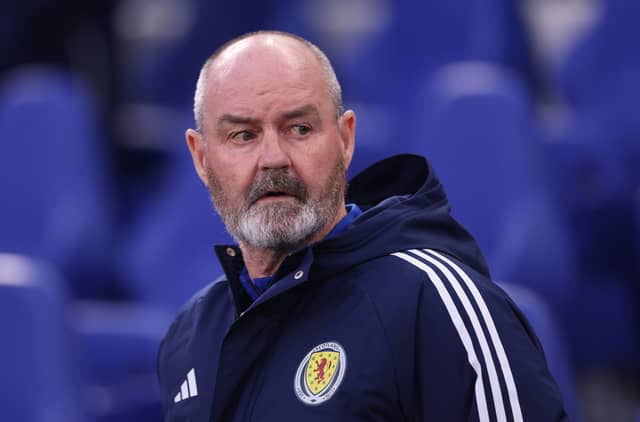

Ross Stewart gives Scotland a weapon they’ll need at the World Cup - but will his inclusion be enough to make a real difference this summer?
The announcement of Scotland’s squad for the 2026 World Cup on Tuesday didn’t provide too many major surprises, save perhaps for one – the recall of Southampton’s Ross Stewart, who earned the last of his two caps back in 2022.
The 29-year-old’s inclusion comes at the expense of Oli McBurnie, who has enjoyed something of a personal renaissance at Hull City, scoring 18 goals in all competitions across the 2025/26 season. So did Steve Clarke make the right call to take Stewart to North America instead – and could he make the difference at Scotland compete at their first World Cup since 1998?
Why taking Ross Stewart over Oli McBurnie was the right decision for Scotland
McBurnie probably couldn’t have done much more to earn a first call-up since 2021. His 17 league goals for Hull have propelled them to the Championship play-off final, and his finishing has perhaps never been sharper – he scored those goals from a combined xG of just 13.2. He would have been a thoroughly defensible form pick.
It won’t have helped McBurnie’s case that he failed to score in any of his 17 previous appearances for Scotland, and nor will it have done him any favours that he had struggled to find his best form for the seasons preceding the current campaign. He managed just 11 goals in 58 appearances for Sheffield United and Las Palmas between 2023 and 2025.
That’s been the story of McBurnie’s career: Brief spells of fine form interspersed with much longer dry spells – and at no point has he managed to convert club form, when he’s found it, into goals for his country. If Clarke couldn’t see a reason why that might have changed, then it’s hard to make a truly strong case for his inclusion.
Stewart, meanwhile, has never really had much of a chance to prove himself for Scotland. Two substitute appearances in 2022 hardly constitute a fair crack of the whip, but that’s all part of the problem the Southampton striker has had – he’s almost never been fit enough to earn any caps.
After starting the 2022/23 season off like a steam train at Sunderland, scoring 11 times in 15 games, the injuries started to kick in. First a hamstring, then his Achilles, then a string of strains and surgeries which meant that he barely set foot on the field for the next three years. Even this year, seemingly truly fit for the first time in a long while, he has been able to start just 12 league games for Southampton.
If Stewart stays fit, however – if – he might just be the best finisher that Scotland can call upon. He’s scored nine goals in the Championship at an impressive rate of a goal every 123 minutes (the best rate in the division) from an xG of just 5.92. Even McBurnie can’t match those numbers. Stewart has instincts in the box which no other Scottish forward can match.
Stewart is also considerably better in the air than McBurnie, although the Hull man is more effective when pressing and hassling opposing defenders. Clarke was left with a choice of two forwards with diverging styles and different qualities – and picked the striker who has consistently been the more dangerous in front of goal over the course of his career, and who is more likely to put away the hopeful ball into the box at a crucial moment. And given Scotland’s struggle to find a reliable goalscorer, gambling on Stewart’s health and predatory quality makes plenty of sense.
Stewart is the striker Scotland need – but strikers are still the biggest problem
Scotland already have a striker who can hassle and hound opposing defenders and play the hold-up role in Lyndon Dykes. They have Che Adams, the only forward to score more than one goal for his country since the summer. They have Lawrence Shankland, in fine form for Hearts and a potential impact sub.
There’s a fair debate about whether McBurnie does anything better than those selected ahead of him. He’s finishing has been excellent this season but Stewart’s better still. His tenacity and hold-up play is a strength, but Dykes probably has the edge there as well as a better track record for his country. George Hirst is better in the air. McBurnie ended up as the jack of all trades, master perhaps of none.
What Scotland don’t necessarily have is the striker who can reliably put away the half-chance when it falls to them and who can also provide the aerial threat who can make crossing balls into a packed box. In Stewart, they have a player who can do both on paper, at a higher level than most of the alternatives available.
That combination of goalscoring and big-match quality seems to have been on Clarke’s mind based on his comments in his press conference on Tuesday: "[Stewart] has shown he can score big goals in big games. The Arsenal game in the [FA Cup] showed he can have an impact on games of that level. He’s a striker in form.”
Whatever his role – be it as a starter ahead of Dykes or Adams in the hopes that he can be more prolific, or as a substitute brought on to try and score a much-needed goal in the dying moments – Stewart offers an answer to Clarke’s biggest question: How to score more goals.
Scotland didn’t struggle to score during qualifying for a change, but only four of their 13 goals in six games came from the strikers and they may not be able to rely on the midfield as much in the tournament itself. Depending on Scott McTominay to be the hero every time doesn’t sound like a winning proposition, even if few would bet against him doing something suitably memorable.
The fact that Scotland drew a blank in their March international friendlies against Japan and the Ivory Coast (against whom they experimented unsuccessfully with playing both Dykes and Adams up front together) suggested that knocking four past Denmark back in November wasn’t an indication that the goalscoring issues had been resolved. Clarke heads into this World Cup knowing that Scotland lack cutting edge up front and that the tried and tested options represent partial solutions at best.
Maybe McBurnie’s all-round game would have been an answer of sorts, but then again he has never found form at the highest level, whether that’s for Scotland or in the Premier League, in which he has a career total of a mere 13 goals in 96 appearances. All those injuries mean that Stewart has a far shorter track record at the top level, but the potential is more readily apparent.
In taking Stewart, Clarke is betting that his finishing and threat in the air will translate against tougher opposition. It’s a thesis that can’t be proven until the World Cup starts – but given that McBurnie has failed to make that leap before, it seems wise to bet on the player who might do it rather than the player that never has. Right or wrong, Clarke is taking a chance on a striker with a high ceiling. That’s something that Scotland haven’t had for a while.