
Celtic need to change their raging 'bin fire' approach to transfers - and learn to communicate with the fans

Celtic have outraged their fans with a club statement ‘explaining’ their controversial transfer dealings - but are they in the right?
If Celtic’s performances this season – from their Champions League qualifying defeat to Kairat Almaty to the dreary 0-0 draw with Rangers last weekend – offer up one lesson, it’s that it’s probably a decent idea not to let your two main strikers leave without adequately replacing them. Based on an official statement released on Saturday, it’s not a lesson that was taken on board.
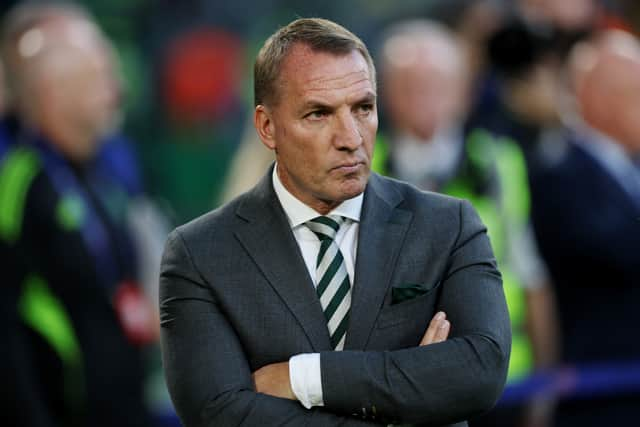

Celtic responded to fans’ concerns about the club’s transfer business by telling them, in a somewhat condescending manner, that “throwing money at transfers and contracts is not a sustainable route to success”. Judging by the supporters’ immediate reaction, it wasn’t the smartest way for the club to have stated their case.
But as Celtic try to navigate their way through a PR disaster, the important question is – are Celtic correct in their decision to keep their belts tight? Have their transfer dealings been all that bad? And are the club or the fans ultimately in the right?
Why Celtic fans see their transfer business as a ‘bin fire’
Talking to Sky Sports News, Paul John Dykes of the A Celtic State Of Mind podcast borrowed another supporter’s words to describe the club’s statement as “tipping a can of paraffin over a blazing bin fire.” It’s certainly a quote which catches the mood of Celtic’s supporters as a whole.
The original bone of contention – the bin fire in this context - is a perceived failure to invest in a team which has won the Scottish Premiership for the last four seasons but which has also struggled to make a significant mark in European competition, and which continually sells its best and brightest talent.
This summer, strikers Nicolas Kühn and Adam Idah, who scored 41 goals between them last season, left for Como and Swansea City respectively for combined transfer fees of around £22 million, but the manner in which they have been replaced, if such a word can fairly be used, is not especially inspiring.
In their stead, the club have signed Kelechi Iheanacho on a free transfer after he was released by Sevilla having scored just 15 league goals in the last four years across spells in Spain and England, and Japanese striker Shin Yamada, who has failed to impress Brendan Rodgers and was left out of the club’s Europa League squad. It would be a pleasant surprise if the newcomers represented a long-term improvement.
Celtic’s statement was at pains to pin the blame for their rather minimalist approach to investment on UEFA’s financial rules, while also suggesting that their stingy approach to spending was “to protect the protect the present and secure the future” and rather brusquely stating that “throwing money at transfers and contracts is not a sustainable route to success.”
Which is true in a vacuum, but not necessarily what fans were asking for. Over the past three seasons, Celtic have made a total profit of approximately £44.5m from transfers, while the club as a whole has posted nearly £60m of pre-tax profits over the past two financial years. There is caution, and there is exercising it excessively. Celtic could spend more without endangering the club’s economic position, and with cash reserves of over £77m there is plenty of financial cushion to fall back on if a few investments go bad.
As it is, Celtic looked toothless in Kazakhstan and insipid at Ibrox, and look set to be overwhelmingly reliant on Daizen Maeda for goals. Leaning on Maeda isn’t necessarily the worst plan of action based on his returns in 2024/25, but it isn’t clear what the Plan B is should Maeda get injured or simply have a less productive year.
Fans aren’t asking for Celtic to stop being a selling club, because most of them know that the economics of football and the imbalance between the wealthiest leagues and the rest makes it an unavoidable necessity.
Nor are they asking the club to chuck immense amounts of cash around in a way that plays with financial fire – but they can reasonably ask that Celtic sign players who offer better apparent returns than Iheanacho and Yamada. Perhaps the pair will end up proving to be inspired purchases and score by the hatful, but it’s an optimistic fan who would bet a substantial sum on it. The club certainly didn’t.
Are Celtic right to keep transfer spending down?
The club might rejoinder fairly that it’s unreasonable to entirely pre-judge their incoming transfers until they’ve had time to settle in – but the timing is another point of contention, given that Iheanacho only arrived after the club had already been eliminated from Champions League contention. The same was true of the deadline-day signing of winger Sebastian Tounetki, the most expensive of Celtic’s new arrivals.
Celtic’s statement made the point that it isn’t always possible to time deals ideally, given the number of variables that go into getting a transfer over the line. They’re on slightly firmer ground there, even if few fans were interested in hearing it after the rest of the 1,000-word plus pseudo-explanation doused everything in all that metaphorical lighter fluid.
It’s certainly difficult to always time deals ideally, given that so many of them involve complex negotiations or rely on dominoes involving other teams to fall before they can happen – but it’s still reasonable for fans to ask that a neck be stuck out every once in a while to get a deal done slightly sooner. A couple of million less in the cash reserve might have been worth it to get the necessary forwards in before the trip to Almaty. It certainly wouldn’t have been the worst gamble to take given the financial rewards of Champions League qualification.
The board can offer up a fair rejoinder with the fact that this is, ultimately, the first time in four years that Celtic have failed to reach the main draw of the Champions League, during which period they have also dominated the top division of Scottish football. These have been both fiscally prudent and ultimately relatively successful times – but success always breeds the desire for more, and one Champions League knock-out tie in those three years clearly didn’t sate that.
It's not that the club statement doesn’t contain some valid points, it’s just that its combination of poorly-considered tone and the inclusion of several specious arguments turns the whole thing into a PR disaster. It’s amazing that anybody involved ever seemed to think that it would go down well or mollify a frustrated fan base.
Celtic’s board simply haven’t everything possible to improve the team, have left Rodgers with obvious weak spots in his squad heading into the new season, and have then followed that up by providing a patchwork of valid justifications and condescending-phrased excuses. A simple sorry and a promise to learn ahead of next summer might have been better. Frankly, not saying anything would have been better.
This is a club whose ownership need to find a better balance between reasonable financial caution and actually investing in the squad to improve it. There is, ultimately, no reason that Celtic shouldn’t be able to improve each year but instead the early evidence suggests that they have regressed.
It’s also a club whose ownership need to learn a thing or two about basic communication. The statement was at pains to point out that the board are listening to their fans – perhaps it would be a good idea for them to learn how to talk to them, as well.