
Chelsea were wrong to sack Maresca - and are on course to blow their considerable potential

Chelsea’s decision to sack Enzo Maresca was the result of a flawed thought process which underpins everything the club do
Go back in time just three weeks and see how many people would believe, even for a split second, that Enzo Maresca would be the first Premier League manager to leave his post in 2026. Yet here we are – a club that have a close acquaintance with chaos have stepped back into instability and are now searching for their seventh head coach since BlueCo bought the club back in the summer of 2022.
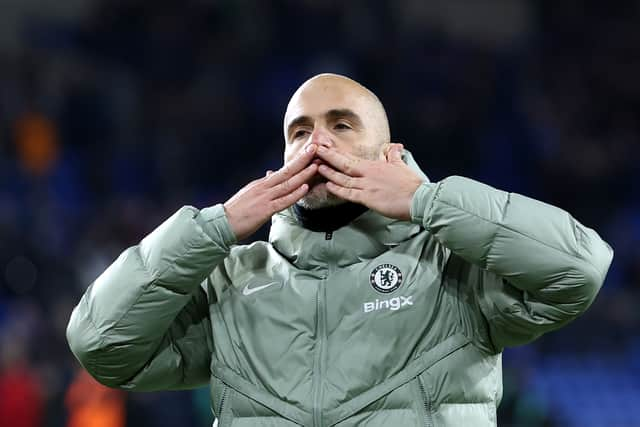

That’s a new manager every six months or so on average, a Watfordian rate of head coaching churn to complement a playing squad which has essentially been overhauled twice since Behdad Eghbali and Todd Boehly took the reins. But did results and Maresca’s flirtations with Manchester City justify the decision to move on? Or is this a symptom of a club run in such a way that they’ll be left chasing their own shadow until they change tack?
Why Chelsea were wrong to sack Enzo Maresca despite his mistakes
On the surface, a run of poor form over the course of December provided some justification for Maresca’s removal. Chelsea won just two of their eight matches, leaving them well adrift of the title race even if they remain a mere three points outside of the top four. But results provided an excuse rather than a rationale.
Maresca’s relationship with his paymasters had been fraying behind the scenes for some time, resulting in his unexpected rant about the “worst 48 hours” he had endured at the club in the wake of the 2-0 win over Everton which would prove to be the only league victory of his final month in charge. It was the breakdown of that relationship with BlueCo which decided his fate, not his win percentage of Chelsea’s form.
The club were, for their part, frustrated to learn that Maresca had repeatedly spoken to former club Manchester City about the possibility of his taking over from Pep Guardiola should the Spaniard leave the Etihad in the near future. That frustration was entirely understandable – it may be laughable for a club that will cheerfully toss players aside at a moment’s notice to demand loyalty, but it’s not unreasonable to ask that the manager not spend his spare time casting around for another job.
If the strain placed on Maresca’s relationship with Eghbali was caused solely by his discussions with another club then it would be hard to say that they were in the wrong to drop the axe. It’s become clear, however, that there was rather more to it than that, and the other grounds for this divorce should perhaps concern Chelsea supporters who probably thought, just a month or so ago, that their club was headed in the right sort of direction.
While Eghbali and Boehly stewed over Maresca side-eyeing the City gig, the Italian appears to have been just as irritated over a combination of Chelsea’s transfer policy and boardroom meddling in his team selections.
Maresca was especially annoyed by the club’s failure to sign a replacement for Levi Colwill when he went down with a ruptured ACL before the end of the summer transfer window, but also at the requests for him to stop rotating his team, something he felt was necessary with such an inexperienced squad.
Chelsea’s approach to transfer business over the last two seasons makes plenty of financial sense but has left them with an incredibly raw side, and Maresca viewed regular rest and rotation as essential to help a side which largely consisted of up-and-comers to handle their workload and the pressure of a long, hard season. Whether he was right or wrong in that regard – consistent selection certainly has its merits – it’s astonishing that board members with no experience as players or coaches would question his calls.
Maresca may not be entirely blameless for the messy manner in which his time at Stamford Bridge has come to a close, but Chelsea gave him good reason to start wondering whether he should be thinking about his future. After all, no Chelsea manager has made it three whole seasons with the club since José Mourinho’s first run ended all the way back in 2007, and Maresca wasn’t being given good cause to believe that he would be the one to snap that streak.
What Chelsea have to do to become the team they want to be
Apportioning blame between Chelsea and Maresca won’t do anything to change the fact that they’re in need of a new head coach, of course. The dice have been rolled, and even if they came up snake eyes it doesn’t change the fact that they have a crucial decision to make. The problem is that their approach to the managerial search bears worrying similarities to their approach to the transfer market, and that’s one that has plenty of flaws.
Chelsea have become magpies, but instead of glittering objects it’s youth they find themselves unable to resist. At the time of writing, sister club RC Strasbourg’s Liam Rosenior appears to be the clear favourite for the job – but he’s just one fresh-faced and largely unproven manager on the shortlist.
Unless the bookmakers are well off the mark with their estimation of the shape of Chelsea’s shortlist (which wouldn’t be unprecedented), their preference is to appoint someone with limited experience of top-level management. Rosenior is in just his fourth full season as a head coach. Other names alleged to be on the list (Cesc Fabregàs, Filipe Luís, Francesco Farioli and Andoni Iraola have all been mentioned in dispatches) are in a broadly similar place with their career development. Luís has all of 18 months of senior club management under his belt.
They may well all turn out to be exceptional managers in due time, and they have all demonstrated both tactical acumen and the capacity to work well with young players, which is essential given that half of Chelsea’s squad is scarcely out of school uniform. But they are all young and at a relatively early point in their career curve. Most elite teams, the wealthiest sides in the Champions League and pushing for trophies, would at least be eyeballing more experienced candidates.
Chelsea, however, have become obsessed with finding the next big thing. It informs every element of their transfer dealings and BlueCo haven’t signed a player over the age of 25 since their first season in charge. That may be acceptable if it all leads to something, but the platform for success is constantly under construction.
Players are being bought young and cast aside in a heartbeat. Take Nicolas Jackson, a frustrating figure at times but also a striker that scored 30 goals in two seasons having signed just 10 days after his 22nd birthday. Most clubs would see that as a promising start. Chelsea got rid and moved on to Liam Delap and João Pedro, two more players who need further development and who have rough edges to sand off. The result has been fewer goals from the centre-forward position.
Chelsea are like addicts chasing the high they got from signing Cole Palmer, and while they’ve bought a number of players who genuinely could turn into superstars – it’s not as though signing Estêvão looks like a bad move – they have also become so committed to the next next big thing that they don’t provide their young charges with the framework to succeed in the long term.
Teams that have had success with young squads generally find that a combination of patience, strategic consistency and an environment which includes more experienced players is the way to get the most out of the kids. Chelsea offer none of these, with the entire issue only exacerbated by managerial churn.
And as Maresca may well have wondered himself over the course of his final weeks, if they didn’t want him to rotate positions, then why did his bosses insist on buying so many new players in certain positions? Why buy both Jamie Gittens and Alejandro Garnacho last summer if they only wanted one of them to get regular first-team minutes? And with so many young players competing for so few starting spots, how are they all meant to be developed? Tyrique George, for instance, seems set to leave soon with no clear path towards starts despite evident talent and appreciable success from his limited opportunities thus far.
The Blues want to be a young, building team but don’t seem to have a clear idea of what the end goal of that concept looks line. There is only more churn, another shiny object to sign, another young manager to appoint. Maresca was himself a gamble and one that looked likely to work out long-term, but now he has been jettisoned, Jackson style, after hitting the first bump in the road.
Chelsea’s young players aren’t being given the best basis for sustainable success and their young managers aren’t either – their decisions questioned, their transfer suggestions ignored, their tenures ended as soon as things get a little rocky. Maresca looked like precisely what the club needed, but instead of doing the difficult thing and listening to him and keeping him on side, he was pushed away. Now the cycle starts again.
Chelsea need to let their young charges settle in and learn that they will fail occasionally. This is a squad still finding its way in football from top to bottom and one which will, inevitably, stumble from time to time, both individually and as a whole. If Chelsea keep selling players and sacking managers to go off and get the next bright young thing, then this is a project which will promise much without ever coming to fruition.
The Blues’ owners and directors need to let promise come to its conclusion, to let potential develop into experience, and to find a better balance between their visualisation of how the club should be run and the needs of the manager. After all, if the manager and players change every couple of seasons and none of them ever get the things they want and need to be at their best, how can this story ever have a happy ending?