
The real reasons why £55m Yoane Wissa has struggled at Newcastle - and why selling him is the right move

Newcastle could sell Yoane Wissa this summer - this is why he has failed at St. James’ Park, and why moving on makes sense.
Less than a year after signing for Newcastle in a deal worth £55m, Yoane Wissa’s unhappy spell at St. James’ Park could be coming to an end. The Athletic report that the Magpies are “exploring” opportunities to sell the 29-year-old this summer after just four Premier League starts and a single top-flight goal.
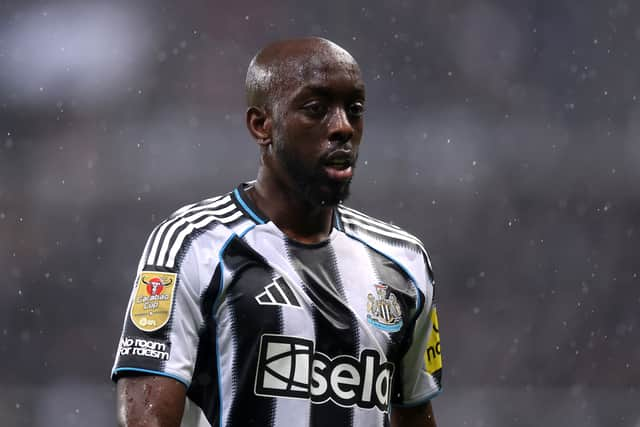

The deal to sign him from Brentford, which came about after protracted negotiations and failures to sign alternative targets such as Hugo Ekitiké, Liam Delap and Jørgen Strand Larsen, has ended up being one of the most frustrating pieces of business undertaken in the 2025 off-season. So why has Wissa failed at Newcastle – and is moving on the best option for Eddie Howe’s side?
Injury isn’t the only reason that Yoane Wissa has struggled at Newcastle
Wissa arrived on Tyneside with plenty of Premier League pedigree. He scored 20 goals in 39 matches for Brentford in the 2024/25 season after taking over as the team’s frontline striker following the sale of Ivan Toney, and on paper looked to be the kind of player Newcastle sorely needed after Alexander Isak’s acrimonious departure – a technically sound forward with proven predatory instincts.
Wissa’s failure was not necessarily foreseeable, but the Congolese international had already sustained the knee injury which would sideline him for nearly four months at the start of the campaign – not that it was expected to take that long to recover when he first arrived. A seemingly straightforward fitness issue turned out to be far more serious than anticipated.
The lengthy delay to Wissa’s integration into the first-team was not ideal, and undoubtedly played its part in a slow start to life at St. James’ Park. He wasn’t able to start a match until the EFL Cup quarter-final win over Fulham in December – a match in which he scored – and he still hasn’t managed a full 90 minutes in black and white. That, in reality, owes at least as much to his form as it does to his struggles to get fit.
“There was a huge feeling inside of him that he wanted to rush back and show everybody how good he is,” Howe told the media ahead of the recent 1-0 defeat to Arsenal. “But we haven’t been able to train him in the way we normally would.
“We didn’t see the best of him. We probably have in training this week. There’s so much more to come. I think a pre-season would really show the best of him… I think the best is yet to come.”
Kind words which didn’t hint at the club’s apparent desire to cut their losses and sell, but a commentary which perhaps undercuts how poor Wissa has been on the field. Fitness has been the single biggest problem, but not the only one.
Wissa has struggled to adapt to Howe’s system, which often leaves the central striker relatively isolated up front. With Isak, Newcastle had a forward whose acceleration and guile meant that pockets of space felt relatively easy to come by, while the Swede’s technique and dribbling skills allowed him to carve out his own opportunities from seemingly unpromising positions. Wissa has not been able to demonstrate a similar talent.
At Brentford, Wissa operated as the spearhead of a rather narrower attack, with both the wingers and the number 10 typically much closer to him, meaning that he wasn’t required to do too much of the legwork himself – rather, he had players nearby who could drag defenders out of his way and present him with chances. Wissa had the finishing and movement to take those chances, but wasn’t often required to make them happen on his own.
It’s probably not a coincidence that Nick Woltemade, who played his best football in Germany as a supporting striker rather than a lone nine, has had broadly similar issues. Newcastle needed to find a forward who was comfortable going solo up front, bullying or simply bypassing opposing centre-halves to find routes to goal. When their attempts to sign their preferred targets failed, Newcastle panicked and found themselves forced to buy forwards who were likely better suited to a different system.
It’s worth noting that perhaps Wissa’s best performance for Newcastle, against PSV in the Champions League when he scored the opening goal in a 3-0 win in January, came when he was deployed at the top of a 3-5-2 with Harvey Barnes playing tight to him in an attacking midfield role. That freed Wissa up in a way that Howe’s usual, spread-out 4-3-3 simply doesn’t.
Wissa has been hobbled by injuries and then thrown into a tactical set-up to which he was not accustomed with what Howe has acknowledged was insufficient preparation. As a result, his confidence has collapsed and his poise has fallen off a cliff. So should Newcastle take Howe’s words at face value and give Wissa a summer to acclimatise before jettisoning him? Or is cutting bait the best solution for the club?
Selling Yoane Wissa may be the safest decision for Newcastle
The argument for moving on from Wissa is relatively easy to make: While Newcastle would likely take a substantial financial hit from an immediate sale, another season of struggles would only devalue him further.
Right now, Wissa may have enough credit from his time at Brentford to persuade another team from Europe’s top five leagues to take a chance on him – a chance which would be pretty substantial given his reported £140,000 per week wages. If he’s on the transfer list a year down the line after a second poor campaign, then he would be the wrong side of 30 and would look less like a forward who’d endured one bad year than a white elephant.
And for all that Howe may claim to have seen flashes of promise in training, that hasn’t translated to any kind of production on the pitch. Why hold on to a striker who has failed to make an impact when the funds raised from his sale (and the money that would be saved on his salary) would help the club to afford his replacement?
Newcastle’s failure to land their top targets last summer owed much to the fact that most top Premier League sides were in desperate need of a striker and were willing and able to outmuscle the Magpies in the market. This summer, fewer sides are likely to be searching for centre-forwards, meaning it should be a little easier for Newcastle to make negotiations stick if they can find a better alternative. The hit they would take on the initial £55m outlay would be painful, but less so than allowing Wissa to hang around and depreciate further while blocking the economic path to his successor.
The case for keeping him around is harder to put together. There is a proven Premier League striker in there, undoubtedly, but no guarantee that it can be teased out – or that he won’t have suffered any lingering adverse effects from the injury that derailed the first half of his debut season.
The only way that the picture seems likely to change substantially is if Howe leaves his post at the end of the season. Newcastle’s owners, representatives of the Saudi PIF, are meeting this week with Howe and other board members and staff to determine the course of the club’s future – and few would be stunned if the manager who has guided them through the last five years moved on as a result of those discussions.
That’s far from certain, but a change of coaching staff could also herald a change in tactical approach, and that could mean that Newcastle end up playing with a more compact system which could suit Wissa better. Perhaps the change of scenery Wissa appears to need could come without needing him to go anywhere at all.
That’s speculative, however, and as it stands Newcastle would seem likely to be taking a greater risk by keeping Wissa than they would by selling him on. It doesn’t help that the pre-season Howe suggested the forward needs may not be a long one – Wissa is expected to travel to the World Cup with the Democratic Republic of Congo this summer. If he requires rest and recuperation to move past the problems caused by his knee, he may not get it.
If Newcastle do indeed decide to sell Wissa, however, there would be one major hurdle to overcome – finding a buyer. His performances at Newcastle won’t encourage elite sides to give him a chance, and his hefty wages (combined with his age) may put him out of the reach of the kind of mid-table teams that might otherwise prove to be interested parties. Newcastle may decide to sell and struggle to find a suitable club to take him on. Perhaps Wissa will get his second chance after all, even if the decision makers at St. James’ Park would prefer it to be otherwise.