
Forget Barry Ferguson - Rangers' ideal next permanent manager is staring them in the face

Rangers have put Barry Ferguson in charge until the end of the season - but a different direction could solve some of the club’s problems.
A year ago, Philippe Clement led Rangers to the top of the Scottish Premier League off the back of a run of nine consecutive wins. He had a young, talented team at his disposal and there was the sense of a side starting to close in on Celtic, who have won 12 of the last 13 league titles. It didn’t last.
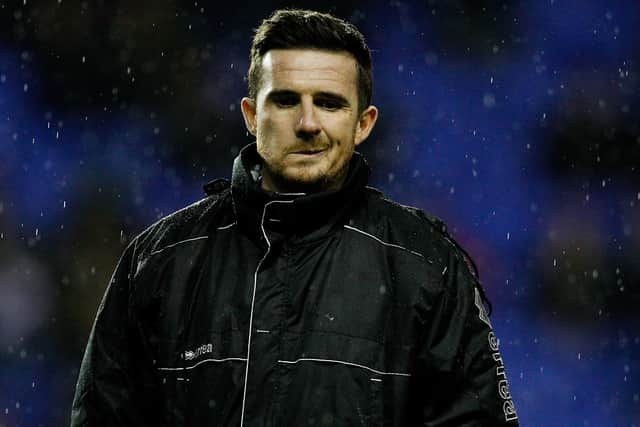

A dire run through March and April saw any hopes of a title challenge slide slowly away, lost 1-0 to their eternal rivals in the Scottish Cup Final, and the soft underbelly of Clement’s side was laid bare. A relatively busy transfer window didn’t toughen them up any, and by the time Clement was relieved of his duties following a 2-0 home defeat to St. Mirren, they were already 13 points behind Celtic, any hope of a run at the championship long since ground into dust.
Now, Rangers stand at a crossroads, one of many they’ve encountered on a winding road over the past decade. Can they find a head coach who can not only add some sorely-needed steel to the side, but also resolve the technical issues which have seen them struggle to maintain a grip on possession against tougher opposition and fail to break down low blocks against less wealthy sides in the SPL?
Barry Ferguson gets first bite of the cherry
The sticking plaster placed over the gaping wound of the last year of struggles is Barry Ferguson, a club legend cannily appointed into a situation which is almost no-lose for him – a chance to prove, after a once promising coaching career in the lower tiers of the Scottish game, that he can succeed in the top job, with fan sentiment likely to remain on his side for the last few months of the campaign.
Ferguson had largely successful spells as a coach with both Clyde and Kelty Hearts, the latter of which he took into the SPFL for the first time in their history back in 2021 – but he struggled at Alloa Athletic after that and hasn’t been in the coaching game since, more recently working for Rangers as a club ambassador.
It’s a free hit for Ferguson, who could well impress enough to earn the top job for himself. Blessed with plenty of technical proficiency in his playing days, the former midfielder may be able to impart some of his wisdom to a group of players that find keeping hold of the ball – and even more so, using it – a challenge.
But his impressive playing career doesn’t qualify him to resolve the psychological issues that seem to haunt the squad and which caused their resolve to crumble down the home straight last season, and his relatively brief career in coaching with rather less storied clubs provides few clues as to how well he might handle a much tougher assignment at a much bigger club, albeit one flailing for answers.
If he doesn’t manage to shine over the next few months, few at Ibrox would place the blame at Ferguson’s door. He has just a few months to start solving a litany of issues. But unless he succeeds admirably, Rangers will spend the summer pondering how to find a manager who can nurture talent, fix the increasingly fragile atmosphere in the dressing room and offer the kind of technical and tactical nous to allow the club to get a proper grip on games. That won’t be easy.
The odds, frankly, are stacked against Ferguson. There is so much wrong with the current squad and so many mental and physical failings that he will have a hard time proving that he’s the man for the full-time job. Then again, who could be?
Bookmakers’ odds suggest an uncertain future
If anybody in the corridors of power at Ibrox knows who the next permanent manager might be, then certainly they haven’t told the bookmakers. The odds available are all over the place, and mostly offer suggestions that seem regressive or simply implausible.
Clement’s assistant manager Issame Charaï is up there in the betting, but it’s hard to imagine that anybody who has watched the team play for the past year would want to go back to that particular well, although the 42-year-old will remain on the coaching staff under Ferguson.
Then there’s Steven Gerrard, a seemingly sentimental option. The last manager to win the league with the Gers, the former Liverpool midfielder’s managerial career has not gone according to plan since. A promising start at Aston Villa went sour at speed, and a stint with Saudi Arabian also-rans Al Ettifaq hardly increased his cachet. He would likely leap at the chance to come back to Ibrox once more, but this is a very different side to the one that he was in charge of.
Past that, a list of names from Scotland and England who have shorter odds largely because they’re available. Russell Martin, a tactical dogmatist who would demand possession-based football but whose failure to elevate Southampton after promotion back to the Premier League muddied his CV. There’s David Wagner, Derek McInnes, even Sean Dyche, who would if nothing else toughen those young bucks up. They probably wouldn’t know what had hit them.
Even Bodø/Glimt manager Kjetil Knutsen comes up in the betting odds, a manager who has been linked with dozens of continental sides only to persistently re-iterate his intent to stay firmly put at a club he loves and where he is understandably adored in turn. He reportedly refused to even discuss the Ajax vacancy last summer. It seems unlikely that a fractured Rangers squad would appeal.
One name does perhaps stand out, both in terms of potential plausibility and managerial style – Kevin Muscat, the Australian former defender who spent one season at Ibrox in 2002/03. He’s hardly a club legend and wouldn’t have the instant backing of the fans in the same way Ferguson will, but at least there’s a certain degree of familiarity there.
More importantly, he’s proving to be a highly capable coach. Starting his management career with Melbourne Victory, he endured a very short and disappointing stint in Belgium before rebuilding his reputation with Japanese side Yokohama F. Marinos, winning the J-League before moving to China to win their top tier with Shanghai Port.
If that career path rings a bell in Glasgow, it’s because Muscat is a product of the Ange Postecoglou school of coaching – a member of his staff in Melbourne, he succeeded the former Celtic coach both there and in Yokohama, with his candidacy for the latter job likely endorsed by his compatriot.
The idea of copying Celtic’s playbook may rankle with some Rangers fans, but it worked rather well over the other half of the city – and Muscat isn’t just a colleague but a disciple, cut from the same cloth and with many similarities in terms of personality and tactical style.
Like Postecoglou, Muscat can be gruff and exacting, a man for blunt statements and honest feedback, something that this Rangers side might need a healthy dose of – but equally importantly, he’s got a proven system which emphasises possession, press resistance and the capacity to play through and around deep-set defences.
In other words, everything that Muscat has proven to be good at in Australia and Asia lines up with everything Rangers are bad at right now. Whether he would want the job is a moot point, of course, and there may be any number of candidates in Europe or closer to home who possess the same qualities – but Muscat offers a sensible blueprint for the kind of manager Rangers seem to need.
Perhaps Ferguson will kick the question to the touchline over the coming months, and perhaps the board have a very different direction in mind, but Rangers need somebody who can give the side some grit and get them on the right tactical and technical frequency. Perhaps Muscat, or a manager much like him, would be the answer.