
Norway, Japan, or even the United States? In search of the World Cup’s real dark horses

Who are the World Cup’s real dark horses? We look at the teams who could make a surprise run towards the final
If there’s one thing we should have collectively learned from Turkey’s travails at the World Cup – and at Euro 2020, come to that - it’s that describing any team as a ‘dark horse’ is always liable to make one look foolish. Dark horses, after all, never seem to actually win major tournaments but do sometimes implode, or fail to score from 62 shots in two matches.

That’s what Turkey managed to do after turning up with a talented team containing two of the brightest talents their nation has ever produced in Arda Güler and Kenan Yildiz. If they were dark horses, they were swiftly sent to the knacker’s yard when they were dumped out of Group D after galling defeats to Australia and Paraguay.
But even though Turkey fell apart almost immediately, a few other teams who aren’t ordinarily among the favourites for a World Cup have been playing well enough to suggest that they might just be able to make a deep run. So just how likely is it that we get a surprise package this summer?
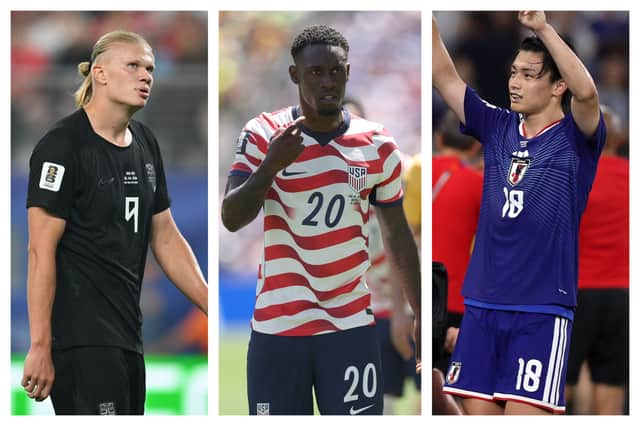
Norway and Japan among the sides who could spring a surprise at the 2026 World Cup
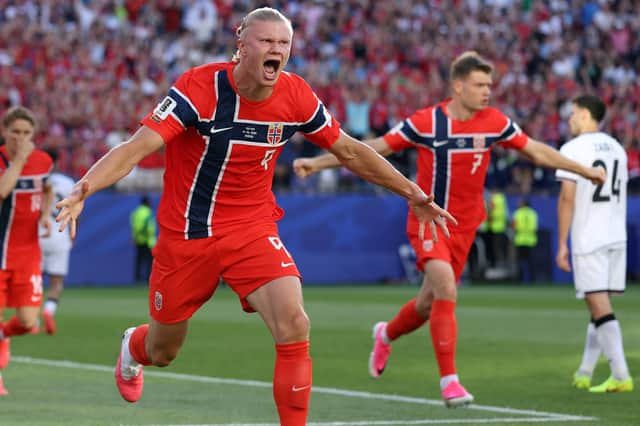
Turkey may have picked up plenty of nominations for dark horse status before the World Cup started, but Norway might have been touted as surprise contenders even more widely – a two-part Netflix series about their qualification campaign was even called ‘Norway: The Dark Horse.’ Despite that, head coach Ståle Solbakken wasn’t keen to talk his squad up too much before the tournament began.
“I think we are dark horses in terms of, on our day, we can maybe beat a stronger opponent. But to say that we are dark horses for the whole tournament is too far,” he said. “We are in a very hard group… I think it will be very tight and hopefully we have the organisation and the match-winners to get through.”
As it turns out, they did. A 4-1 win over Iraq was followed by a 3-2 victory over Senegal and Norway are indeed through to the knockout stages of their first World Cup since 1998. Erling Haaland already has four goals and his side looks lethal up front. The question is whether they are defensively sound enough to get past a country that can match them for firepower.
They were somewhat fortunate to concede just once against Iraq and they made life far too easy for Senegal on occasions, especially when they simply declined to mark Ismaïla Sarr ahead of a late goal which might have inspired some jangling nerves had it happened just a little sooner. Both Iraq and Senegal managed more shots on goal than Norway.
In Haaland, they have an astonishingly potent weapon up front but they haven’t yet looked like an entirely balanced side – and they aren’t the only team who have a world-class striker in their ranks. Norway’s game against France on Friday may not have all that much riding on it, but it might give us a better idea of how they’ll stack up against stronger sides.
Not that Senegal are any pushovers, at least on paper. They will be disappointed with their performances so far but still have a chance to qualify for the knockout stages with a win over Iraq, and proved themselves to be the best team in Africa in January before they were stripped of their AFCON title as a result of their protests over the referee’s decision to award Morocco a penalty in the final. If they do make it to the knockout rounds, they could yet be dangerous.
Morocco, too, were excellent in their 1-1 draw against Brazil and have several very dangerous players, while the Ivory Coast pulled off an impressive victory over Ecuador before giving Germany a significant scare. Perhaps one wouldn’t bet on an African side to make the semi-finals again as Morocco did in 2022 just yet, but they have some sides who are quietly playing well without generating an excess of attention.
Japan are generating a little more hype. Their 2-2 draw against the Netherlands was contextualised when the Dutch thrashed Sweden a few days later, while their dominant 4-0 win against Tunisia provided further evidence that they have an exceptionally well-drilled side at their disposal.
That they went toe-to-toe with the Netherlands in a truly even game despite the absence of Kaoru Mitoma, probably their best player on paper, suggests that they will be able to give plenty of tougher sides a run for their money. They may be among the most organised teams in the tournament in both defence and attack – and won six consecutive friendly matches in the build-up, including wins over both England and Brazil. They have the look of a side that could spring an upset or two down the line.
Could the United States really win the World Cup?

Of course, if you ask any American fan about who they think might win the World Cup now, quite a few of them would say the United States – and Mauricio Pochettino’s side have been genuinely impressive in cruising through the very same group which Turkey made a meal of.
Wins over Paraguay and Australia have fuelled a surge of self-belief among their supporters, and it would be uncharitable not to give their side considerable credit for the way they’ve handled the burden of being a host nation. They have some talented players and have shown us flashes of the kind of fearless, freewheeling football that became Pochettino’s trademark at Tottenham Hotspur.
Those Spurs sides never actually managed to win anything, of course, and one suspects that the United States may find it hard to be quite so assertive when they run into a truly first-rate team. They were beaten by Germany, Belgium and Portugal in their warm-up games, suggesting that there is a limit to how far their bravado can taken them. Given the way that the draw is developing, however, such challenges could be another round or two away – and they did beat Japan last September. As we now know, that’s a potentially significant data point.
Mexico and Canada are also through to the next round. The latter smashed Qatar to book their place in the round of 32 but may be too short of quality in defence and midfield to go much further. Mexico, however, have an added layer of home advantage other teams won’t be able to enjoy.
Top their group, as they will do so long as they avoid defeat to South Korea, and they will be set for consecutive fixtures at the Estadio Azteca, 2,200m above sea level and at an altitude that their potential opponents – which include England – are simply not adapted to.
Having won their first two matches, the immense pre-tournament pressure has eased slightly and between the altitude and their aggressive, disciplined playing style, it would be no great shock were they to make it through to the quarter-finals, as they have done on both of the previous occasions in which they have played host.
The United States may have found early-tournament form and a truckload of confidence, but Mexico might be the most dangerous of the three host nations given the way that the bracket is unfolding. Is that enough to make them dark horses? It depends on your definition – but England won’t fancy the idea of a last 16 match in Mexico City.