
Death match at the Azteca - what England's triumph over Mexico means for the rest of their World Cup

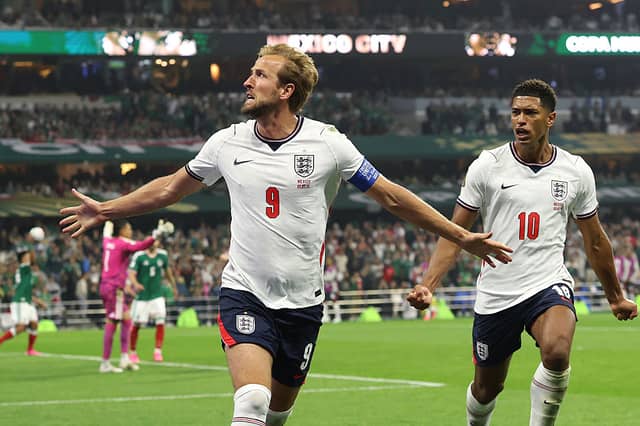

England saw off Mexico in a round of 16 thriller earlier this week...
In the lucha libre tradition, nothing is as sacred as the mask. For all of the pomp and pageantry, the Mexican dedication to la máscara is more than just a gimmick; to a luchador, the mask represents pride, honour, identity. It is their self-hewn legacy, the calling card by which they hope to echo through the decades, long after they unlace their boots and leave them in the centre of the ring.
As such, there is no greater shame than being unmasked. Every so often, wrestlers will put their personas on the line in histrionic showdowns, and custom dictates that those who lose must reveal their true name, date of birth, city of origin, and, crucially, face to the watching world. There is an inherent understanding that by doing so, these heroes have shed the mystique and the aura of the superhuman, have come crashing back down to the confines of reality in a dust cloud of fallibility. An unmasked luchador becomes that most humbling of things: ordinary.
Before England made the foreboding climb to Mexico City in the early hours of Monday morning, the narrative surrounding the contest very much lent itself towards Thomas Tuchel’s squad suffering a similar ignominy against their baying hosts.
The German has repeatedly assured us in recent weeks that his team will improve as the World Cup progresses, that they will play better against the better teams, that they are serious - if somewhat pragmatic - contenders in North America.
And yet, the evidence was sparse. With no truly high-calibre opposition to test Tuchel’s assertions against, we had instead been left with a series of stilted, humdrum grapples against nations intent on frustrating England into self-capitulation. Except Croatia, of course. Bless them.
Then there was ‘The Altitude’™ - a phenomenon spoken about beforehand with the kind of petrified awe more suited to panicked sightings of a man-eating fog in a campy straight-to-video horror film - and the influence of a partisan home support who have already made a habit of shredding eardrums and nerves alike this summer.
And so, high up in their eyrie, Mexico must have felt invincible. There they have sat for weeks now, welcoming all comers to their lofty plateau, nestled stoically in the valley at the heart of their nation, like mountaintop kings defending their keep. There is a folklore to the Azteca, a mythical quality sewn into its turf, one that conjures images of lightheaded visitors discombobulated by the gossamer air, cowed by the din of an obstreperous crowd, impaled on booby-trapped spikes like naive explorers venturing too far into a tomb cursed by the ancient ones. The stats only served to stoke fears as well - just two defeats in 89 competitive outings; an intimidating record, no matter the standard of opposition.
Such was the trial awaiting England as they put their mask on the line in Mexico City. But even in the midst of the tumult and the tetchiness - with a nation watching bleary-eyed in the dead of night back home - few could have predicted what was to come. Make no mistake, this was a death match - bloodstains on the canvas, turnbuckle exposed, brass knuckles hidden in the trunks.
By now, you know the details, will no doubt have mused on them again countless times when you really should have been doing something more important instead. Jude Bellingham, banishing the ghosts of the Hand of God with a touch of his own divinity and a 98-second brace that felt like a feverish bout of deja vu. Jarell Quansah, with his unfortunate - if justified - red card to throw the whole thing into perilous doubt. Anthony Gordon, like a turbo-charged Clare Balding, nipping in to hand England a timely lifeline. Harry Kane, with his thumping penalty and his post-match interview like a squeaking sock puppet from a kids’ TV show in the ‘70s. Jordan Pickford, simply sublime, as he tends to be more often than not. Dan Burn, coming off the bench like a nine-fingered totem pole to head every Mexican delivery in his general vicinity up and away into the constellations. Even Jordan Henderson, booked on the touchline and then navigating an advertising hoarding with all of the grace and dexterity of the Kool-Aid Man, has his place in a story that will linger for generations in the English psyche.
But Monday morning felt as if it mattered for more than the immediate gratification of a stunning victory under fiendish circumstances at a frankly absurd kick-off time. This was England as grit incarnate, a performance that made manifest the togetherness and obstinate desire to win that those in camp insist they have felt throughout.
With one thunderous showing in the eye of a storm, Tuchel and his men have punctured the malaise that has dogged this World Cup. We have finally, at long last, reached the stage of the tournament where the players feel like an extension of ourselves, and where the unique strain of belief that can only germinate in absolute unity begins to sprout.
Which brings us back to the significance of the mask. As goes without saying, the differences between lucha libre and football are many and very obvious. One, for instance, is predetermined and choreographed - a fantasy of sorts, if you will - while the other - despite the best efforts of certain presidents, political and non-political alike - is not.
Where they converge, however, is in the need for the very best of each to maintain a sense of magic, to be able to stir an outpouring of passion. An ordinary person cannot don a mask and step between the ropes in the much same way that an ordinary team cannot win the World Cup. A luchador must protect their mask because it is the key to making people believe that they are capable of glory. Against Mexico, England’s mask did not slip a single inch.