
Exclusive: USA legend explains what went wrong at World Cup - and why the future is still bright

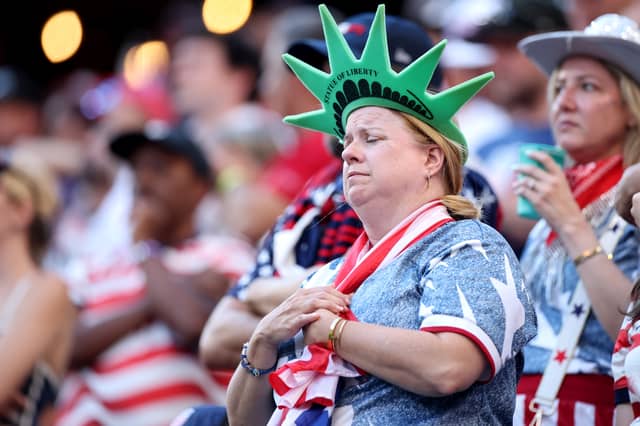

A legendary former USMNT star explains why they came unstuck at the World Cup
One of the most extraordinary plotlines to develop in the 2026 World Cup was the rollercoaster tournament enjoyed – and then endured – by co-hosts the United States, who started in spectacular fashion only to be knocked out with a heavy defeat which was mired in controversy.
The US men’s national team won three of their first four matches to make the last 16 and many pundits in America began to believe that their team was on the brink of achieving something special – but they were ruthlessly beaten by Belgium, with the headlines ultimately focussing less on the team’s achievements than on the presence of Folarin Balogun, allowed to play after a red card ban was controversially suspended.
The US had only once before made it as far as a fifth match. One of the heroes of their run to the quarter-finals in 2002 was Brad Friedel, who became only the second goalkeeper to save two penalties from open play in a single men’s World Cup and earned the nickname ‘The Human Wall’ from his countrymen for his performances.
Speaking exclusively to 3 Added Minutes courtesy of BetGoodwin, the former Blackburn Rovers, Liverpool and Tottenham Hotspur goalkeeper explained why he believed that the US ultimately came undone during their 4-1 defeat to Belgium.
Why the US were knocked out of the World Cup – and why the Balogun controversy was key
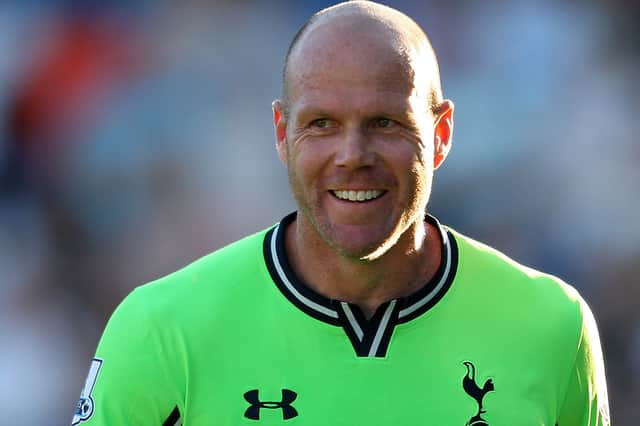
“If teams have fast wingers against us, we will find the game much more difficult,” Friedel, who now works as a pundit, explained. “One of our strengths is in having Alex Freeman and Antonee Robinson going forward, and when they’re forced to defend, as you saw [against Belgium], then our wingers get isolated and they don’t get the overlapping or underlapping runs. Christian Pulisic and Serginho Dest found it really difficult to get any type of service or link-up play without that.
“I thought that Rudi Garcia made very good choices in playing Dodi Lukebakio and Amadou Onana. I know he got injured, but he set the tone. He’s an athlete, and when you take the athletic ability out of our team, that’s a huge part of our strength.
“Then, it becomes about who’s be better technically, and teams like Spain, France, England, Belgium and so on are going to be just a little bit better.”
A member of the US National Soccer Hall of Fame who earned 82 caps for his country, Friedel also felt that FIFA’s decision to suspend the ban given to Balogun after he was sent off against Bosnia & Herzegovina played a key role in their defeat – and believes that it motivated Belgium to play some of their best football of the tournament.
“I haven’t seen Belgium play with that intensity in a couple of years. I think it had a huge effect on the game.
“The other way that it affected the game was that 48 hours before that happened, I think most of the world, including most of Europe, wanted the US to beat Belgium and then overnight the whole world wanted us to lose.
“That had nothing to do with the players or the staff, that had to do with what went on off the pitch. I think that really affected the outcome of the match. Also, you don’t want to wake up sleeping giants, and that’s what happened.
“I think the federation also know that they made a mistake, because don’t think that they didn’t know what was going on behind the scenes during all that. I think it was a live and learn process [about] keeping politics and sport completely separate.”
As a result of Belgium’s defeat, the United States fell short of equalling their best performance at the World Cup. The question now is whether they can build on the positives from a tournament which started in such impressive fashion – and whether the outcome will have an impact on how many people get involved in football going forward.
Will the US ever become a football superpower – and did the World Cup make a difference?
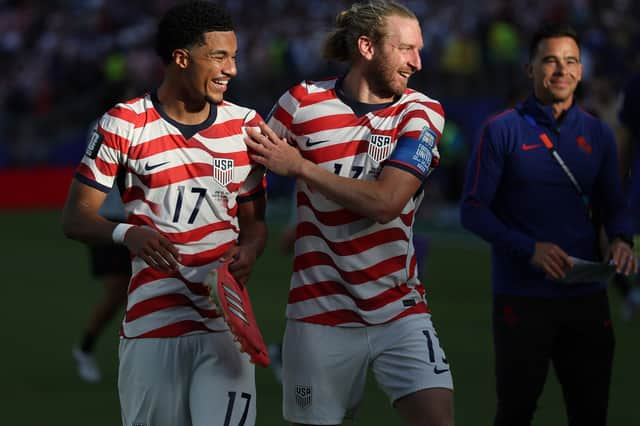
Prior to the World Cup, there were fears that many Americans would be indifferent to the tournament. More than half of American surveyed beforehand said that they wouldn’t watch a single match – instead, the national team’s progress to the round of 16 made headlines, and their defeat to Belgium became the most watched television broadcast in the country since the last Super Bowl.
The quality of the team’s performances, especially in their opening match, created a wave of optimism and got people who didn’t normally watch football to pay attention.
“I thought that we did everything that was asked of us in the World Cup,” Friedel said. “I was most nervous actually for the first game against Paraguay because you always want to get off to a good start… That first-half performance was one of the best performances I’ve ever seen from a US national team. It was brilliant… It was all positive stuff.
“We need the sport to become one of the top two or three sports in the country with regard to viewership. In the domestic league, you need those figures to rival the NFL which they are very far away from. We need kids in all areas of the country wanting to become professional soccer players.”
Football remains a minority sport in the US, but its popularity is increasing rapidly. A YouGov poll taken before the tournament found that the number of Americans who actively followed the sport had risen by 50% since the 2022 World Cup in Qatar, with an even more pronounced increase among 18-34 year-olds.
Despite those gains, football is still stuck in the shadow of the ‘big four’ sports – American football, baseball, basketball and ice hockey, and Friedel believes that the only way for US football to reach a higher level is for it to find a way to generate the same kind of interest.
“I think the next 18-24 months is enormous, seeing if MLS figures actually get a boost from this World Cup. If they do, and in 2029 there’s a big bidding process for a new media rights deal and that can double or triple or quadruple in value, then you know the sport’s moving in the right direction.
“Hopefully this World Cup kick-started some of the younger generation wanting to become fans and take them away from some of the other sports, but we have some big sports and big stumbling blocks to fight up against that other countries don’t have.
“We’ve got an uphill battle. Until we become one of the top two sports – I don’t mean as a participation sport, I mean a real cultural change of kids wanting to become professional soccer players - that is the time that we could have a golden generation.”
In the shorter term, Friedel remains positive about the chances that the US could continue to improve – and believes that the continued presence of Mauricio Pochettino, who signed a four-year contract extension this week, will help them to move forward in a positive direction.
“We’re still going to build, we’re still going to be competitive, we’re still going to be able to upset teams at time and as you saw this World Cup, be able to beat the teams we should beat.
“They have a head coach now who wouldn’t have taken the job unless he thought he could do something special with the group, and it’s irrelevant what any of us on the outside think – what’s important is that he thinks he can take the group and do something special, and the players in camp, he’ll make them feel that way as well.”