
Eddie Howe's departure should worry Newcastle United fans - their project stands on the brink

Some Newcastle fans believe that it was the right time for Eddie Howe to go - but his resignation speaks volumes about the direction the club is taking.
When the news of Eddie Howe’s decision to quit Newcastle United broke, it came as a shock. Looking back over the way that the last year has played out, however, perhaps we should have seen it coming from a mile away.
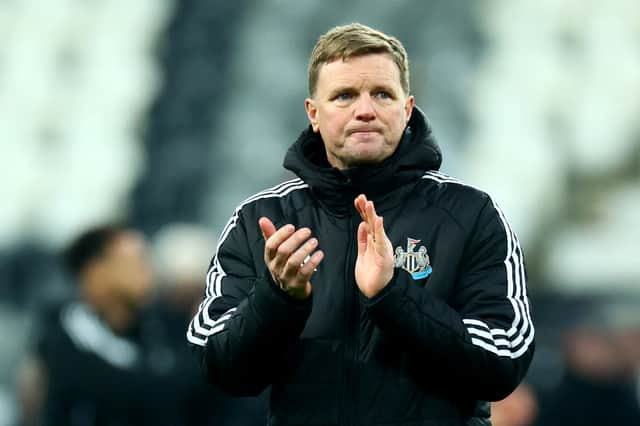

Howe’s resignation came on the back of a deeply difficult year on the field, but given that it was his choice to leave it’s rather more relevant that it has come in the midst of a second consecutive summer of chaos and uncertainty in the transfer market.
As the club prepares to enter the post-Howe era, the question should be whether his loss was a necessary step to stop the recent rot – or a symptom of a much larger problem with the way that Newcastle are run.
Why Eddie Howe’s resignation should worry Newcastle fans regardless of recent form
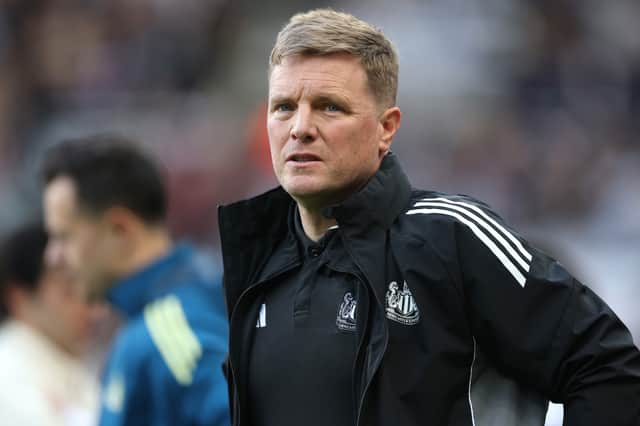
There are plenty of Newcastle supporters who believe that it’s the right time for Howe to step away. He may have earned them their first piece of silverware in generations and a place in the Champions League – twice – but results were falling away and the 2025/26 season was an undeniable disappointment.
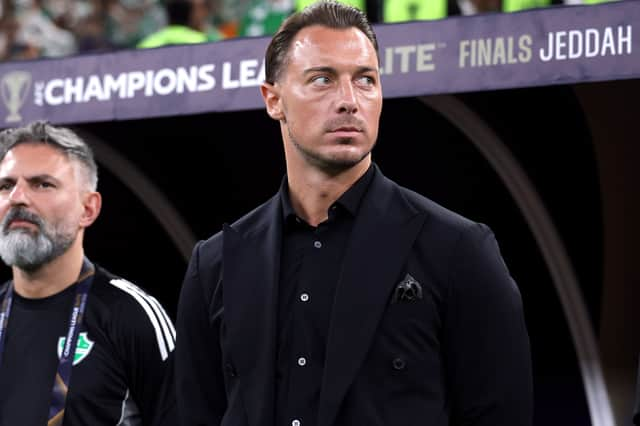
It’s conceivable that Howe had run out of steam, and there was a palpable reduction in the intensity with which his side played over the last year. It’s perfectly possible that his presumed replacement, Al-Ahli’s Matthias Jaissle, will be an improvement. But the reality is that Howe was labouring under increasingly difficult conditions and even if he bears some portion of the blame for the collapse of the club’s form, he wasn’t alone.
The summer of 2025 was a disaster for Newcastle, with Howe a helpless bystander as a series of serious mistakes were made in the transfer market – partly a product of the unwanted sale of Alexander Isak, but also of a massive failure of recruitment. The result was that Howe was asked to follow up a trophy-winning, top four season with a weakened squad.
There was some bad luck in there - they were beaten to several transfer targets and it was impossible to predict the injury which derailed Yoane Wissa’s debut season – but blaming an entire summer’s worth of mistakes on misfortune would be misguided. For starters, one of the reasons that they kept missing out on players they hoped to sign was that they wouldn’t match the salaries offered by other clubs. That was a choice.
And some of the signings they did make didn’t make much sense. £52m was always too much for the inconsistent Anthony Elanga, Howe didn’t quite seem to know what to do with Jacob Ramsey, and in Nick Woltemade they signed a largely unproven player whose best football had been played as a supporting striker to operate in a much more isolated number nine role.
Newcastle panic-bought players who were ill-suited to Howe’s system. Throw in a few significant injuries and Joelinton’s form falling off a cliff, and the club was heading into the 2025/26 season with little chance of repeating previous feats. One can argue that a better manager might have solved the puzzle by reworking their tactics to suit the new arrivals, but the recruitment department’s failure to provide him with the appropriate tools was surely the greater error.
Thanks to last season’s mistakes, Howe entered the summer with a slightly battered reputation while the team’s ability to hang on to key players evidently took a massive hit. Without European football and with the sense of upward mobility stalled, Anthony Gordon, Sandro Tonali and Bruno Guimarães all decided that their future lay elsewhere and two have already got their wish for a transfer. Lewis Hall may yet follow. Howe, it would appear, simply snapped.
Plenty of up-and-coming teams have to cope with having the spine of their squad ripped out but learning to replace and rebuild on the fly is a part of the challenge. Newcastle, it would seem, learned little. They missed out on their preferred replacement for Gordon, Victor Muñoz, in an eerie echo of the ceaseless gazumpings of 2025, and the only players they’ve signed thus far have all been 20 or younger.
That sends a message – that the club have given up on trying to win with the current squad and are instead set on building from the ground up again. It might work eventually, but the short-term pain could be considerable and one can hardly blame Howe for not wanting to have his face on the front cover of what could be another challenging campaign.
Looking back at the last two years and taking a broad view of the club as a whole, the turning point was the loss of former sporting director Dan Ashworth in 2024. During his tenure, recruitment was a consistent strength and the club mostly signed players in a holistic manner, finding new faces who complemented Howe’s playing style.
Since Ashworth left, however, his successors – Paul Mitchell, who lasted just 11 months in the role, and now Ross Wilson – have overseen a series of confused and unsuccessful attempts to keep the squad up to code. Something went awry in the boardrooms and backrooms of St. James’ Park, and it seems that Howe didn’t believe that recent changes of direction had the club pointing the right way.
Why blaming the Premier League’s financial rules misses the mark
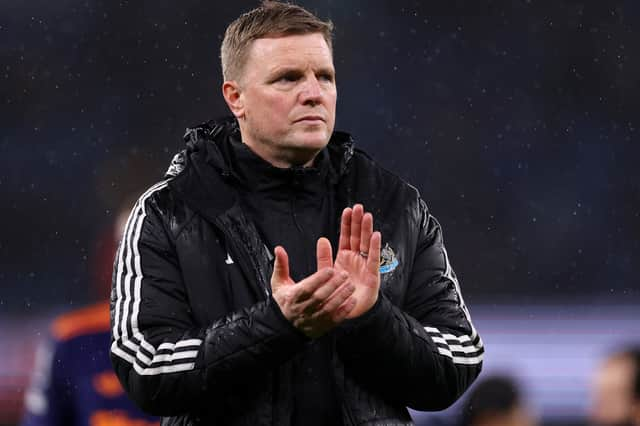
Because the head coach is generally the person with whom the buck stops in the court of public opinion, Howe took a fair chunk of the criticism for the last year’s downturn – but within the club itself, the stock excuse for any disappointments has been the Premier League’s financial regulations.
Opponents of the PSR (and the new squad cost ratio rules which replace them this summer) may have a point in observing that one of the side-effects of the rules is that they calcify the economic order of football and hand an advantage to the established elite, but under the ownership of the Saudi PIF they still spent considerable sums.
In the five years leading up to this summer, Newcastle had the sixth-highest net spend of any club in world football – only Manchester United, Arsenal, Chelsea, Spurs and PSG spent more in the transfer market. The Magpies paid more money for new players than Manchester City or Liverpool, Barcelona or Real Madrid. There may have been restrictions, but the idea that they have been heavily handcuffed doesn’t stand up to close scrutiny.
For years, that heavy spending worked because the club bought well. They broke the glass ceiling and reached the top four and won the EFL Cup. The regression came when Newcastle stopped playing the transfer window well.
The story of the last two years is the fracturing of the ownership group which bought the club back in 2021, a failure to maintain a positive direction in the transfer market in the aftermath of the departures of Ashworth and co-owner Amanda Staveley, and a sharp subsequent drop in both the quality of the team and the extent to which the players bought lined up with Howe’s needs. Financial restrictions play a very limited role in the narrative.
The shiny new plan, with Wilson at the helm, seems to be to concede that the recent upward curve has reached its conclusion and to build a new squad filled with young talent which can grow together – and now they seem set to appoint a young manager to go with them.
Perhaps, in a few years’ time, it will all look like a cunning plan which came together. Perhaps players like Bazoumana Touré, Sean Steur and Aladji Bamba will live up to their potential, maybe Jaissle will turn out to be an inspired appointment, and we could be talking about Howe’s departure in positive terms – a changing of the guard at the right moment as the club boldly but correctly changed tack and built something strong and lasting.
Or perhaps the gamble on youth goes south, Howe’s loss is felt all too keenly, and the probable short-term pain does long-term damage as the image of a club which can challenge the elite falls apart with knock-on effects on their ability to recruit high-level players. Howe’s departure suggests that he has a pretty strong opinion on which outcome is more probable.
Whether Howe’s own performance as manager had dipped or not, the concern isn’t just about the loss of an experienced and passionate manager – few managers are truly irreplaceable, after all - but the fact that the circumstances surrounding his departure hint at significant behind-the-scenes dissatisfaction with the way that the club is handling its rebuild.
When the current owners first took charge, they spoke of building a team which was in the conversation about the best clubs in the world by 2030. Right now, that looks like wishful thinking. Whether Howe was the right coach to take the club forward or not, the more pressing question is whether the owners are appointing the right people at several other levels of the club’s management. His resignation should be the spark for some serious introspection – and if it isn’t, then an ambitious club may have a pretty substantial problem.