
Drinking alcohol in the stands? It’s probably a good thing – but bring a cagoule

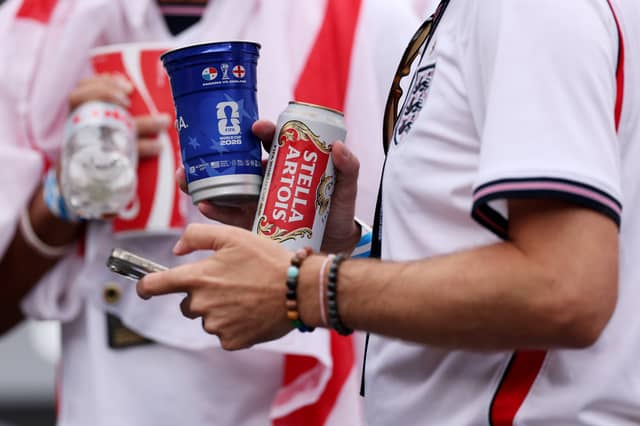

The Prime Minister has hinted that drinking in the stands could become legal at football matches - but is it a good idea?
In 1985, drinking alcohol within sight of a professional football match was made illegal. Now, more than 40 years later, a ban which dates back to the era of hooliganism might be lifted.
Prime Minister Andy Burnham told reporters that he didn’t “think it’s fair” that football supporters were singled out by legislation which doesn’t impact other sports such as cricket or rugby, or other entertainment events. It’s led to speculation that the ban could be lifted during the course of the current Labour government – and it’s an idea which has been welcomed by both the EFL and the Football Supporters’ Association.
The police, on the other hand, aren’t quite so keen, and have warned that it would be “incredibly rash” to allow booze back in the stands. The dark days of hooliganism, however, seem to be in the rear-view mirror. So, is it a good idea to allow fans to sup a pint from their seats again?
Could drinking alcohol in the stands at football become legal again?
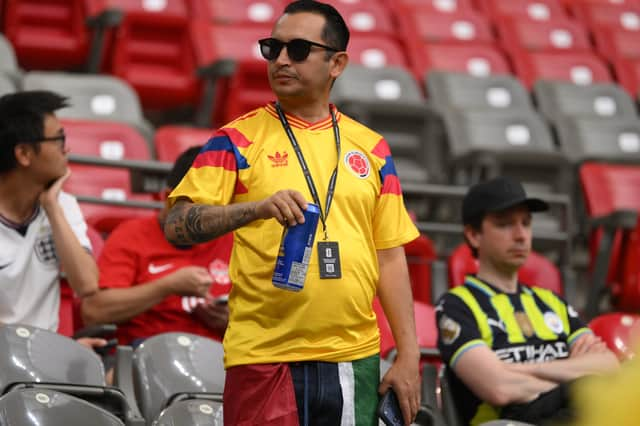
Burnham – a lifelong Evertonian – has previously spoken up against the ban on drinking in the stands, and reiterated his view in press interviews which offered the strongest hint yet that a reversal of some of the provisions of The Sporting Events (Control of Alcohol etc) Act 1985 could be on the cards.
“I think that legislation dates to an era where football was very different,” Burnham said. “And I do believe there is a case to remove that discrimination. There are different ways it could be done, perhaps on a trial basis. But I’m not going to back away from what’s been a long-held view of mine. I don’t see how it can be fair that some supporters of one sport can be treated differently.”
It should be noted that a reversal of the ban is not yet official government policy, no bill has been introduced to parliament, and no trials have been announced. There are many barriers to cross before fans might be able to sip a beer from their seats once more.
The ban came in as part of a raft of measures introduced in the 1980s to curb the rise of football hooliganism, which had become a very genuine problem across the United Kingdom, and especially in England.
Violence and disorder at football matches had become so commonplace that a raft of restrictions were imposed to improve safety, ranging from the compulsory introduction of all-seater stadiums in the Football League to an overhaul of the way that matches were policed.
There is no sane way to downplay the extremes of hooliganism between the Seventies and Nineties. It became so bad that English clubs were banned from European competitions for five years between 1985, when the alcohol ban came in, and 1990, and for good reason. Wherever English supporters went, trouble followed.
It’s been a long time since hooligan culture was a significant problem in England, however. Problematic behaviour began to peter out through the 1990s, and the last real flashpoint came during Euro 2020 in Belgium and the Netherlands. Since then, English fans have generally been far better behaved both at home and abroad. Few fans now attend matches with violence as a primary objective. Large rival groups don’t meet for fights before or after games. Times have changed.
You can’t, perhaps, blame the police for being wary given past issues, and the dreadful behaviour of many fans immediately after lockdown measures were lifted following the coronavirus pandemic didn’t exactly provide a great advertisement for the progress which has been made.
The collective post-Covid headloss, highlighted by violent disorder ahead of the Euro 2020 final at Wembley when ticketless fans charged barricades to force entry and one supporter memorably shoved a flare where the sun didn’t typically shine, didn’t last long. The insanity created by being cooped up for months on end proved to be temporary. Crucially, we didn’t see a return to violence between rival groups of supporters, at least on a large scale. People just went a little bid mad for a while, and soon screwed their heads back on and withdrew the flaming beacons from their orifices.
For the most part, anyway. There have been occasional flashpoints, including ugly scenes between rivals fans at a match between West Bromwich Albion and Wolves in 2024. These are unsavoury incidents, but crucially isolated. It appears to be broadly reasonable, 25 years on from the death of hooliganism as a pervasive cultural force, to believe that most fans can now be trusted with a pint during the game - and England fans caused no issues when allowed to drink during games at the 2026 World Cup.
After all, those who wish to drink heavily are still doing so before and after the match without creating a broader public menace – at least outside of their immediate personal vicinity - and while there will always be those few who imbibe (or take) too much at a match and cause a scene of some kind, it’s fanciful to imagine that as a problem which will ever go away with any kind of legislation. What matters most is that the cultural reset off the field appears to be more or less complete.
What are the pros and cons of a change in the drinking laws?
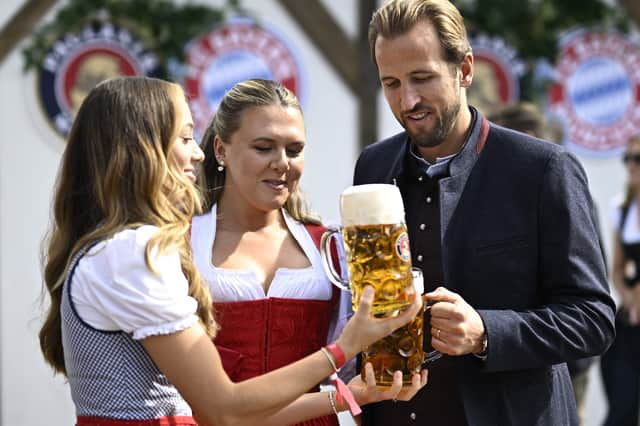
Even if the optimistic view that allowing alcohol in view of the pitch at games won’t lead to renewed social problems is taken as a fact, however, there is still a very good question which must be answered before any changes are made – does it actually benefit anyone?
After all, football supporters as a whole have become perfectly used to not being able to drink during a game unless they’re willing to leave their seat before the end of the first half in order to neck a pint of (probably bad) overpriced lager in time for the second. It may not be ideal, but the ban hasn’t really hurt anyone, and there isn’t an especially substantial lobby calling for the law to be changed. After all, it’s really no more than a minor inconvenience.
There is a big upside, however, and that’s to the clubs. Teams would be able to sell far more alcohol at grounds during games and a relatively significant upswing in turnover can be expected to follow.
The profit margin on most alcohol isn’t generally that wide for a pub, but stadiums don’t have to be competitive in terms of pricing – once a fan is through the gates, they either pay an inflated fee for their drink or go without. Plenty will pick the former.
Premier League clubs might not exactly be strapped for cash, but many teams down the EFL ladder would benefit immensely from an uptick in matchday revenue, and it would ease the significant financial pressure most teams face. Many clubs outside of the top flight are forced to choose between deliberately overspending to stay competitive, or to risk tumbling down the divisions if they keep the purse strings tight.
Permitting alcohol sales during games would ease the financial tension slightly, and it’s no wonder that the EFL has already backed the idea of an easing of restrictions. A spokesperson for the EFL has said that they would be “receptive” to a change in the legislation, adding that the law “has not kept pace with significant developments in stadium management, safety and stewarding”.
The potential downside, then, is twofold – one, the possibility that easier access to alcohol would lead to renewed violence, which seems somewhat unlikely from an admittedly inexpert perspective, and two, that every goal celebration will turn into an impromptu shower of sticky brown liquid.
It’s one thing to enjoy clips of England fans launching their lagers into the air at fan parks every couple of years, another to endure being soaked in beer every single week. The idea of having to take a multi-hour coach trip home covered in half-dried Carlsberg while surrounded by the stench of dozens of similarly-drenched supporters isn’t especially appealing.
But from the perspective of those of us who would quite like to enjoy a civilised pint in the stands to take the edge off of another defeat, the idea of undoing the long-standing ban is rather appealing. We’ll just have to pack a cagoule. And some air freshener.