
Tuchel wants to ‘embrace chaos’ - a defensive rethink and a Newcastle star could help England do just that

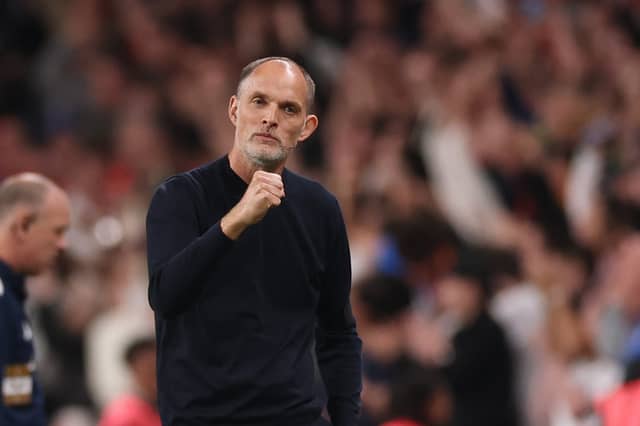

England’s style of play is under scrutiny - if Thomas Tuchel wants it to become more chaotic, he needs to change how he sets up his defence.
Thanks to Anthony Gordon’s comments about England’s style of play and the ensuing conversation about the need for the Three Lions to embrace direct, counter-attacking football, this Nations League campaign has become less of a tournament and more of an audition for the identity that Thomas Tuchel is trying to stamp on his squad. Following Saturday’s defeat to Spain, the jury is still out.
England enjoyed some good spells of play but were ultimately outgunned by a Spanish side who represent the Platonic ideal of an international team who play with a unified identity. Years have passed since Vicente del Bosque and the age of tiki-taka, but Spain still inculcate their new caps in the same fundamental possession-and-pressing style, and still keep winning.
England haven’t quite found their equivalent but as Gordon noted, England generally look at their best when they’re willing to play the kind of fast, vertical football which has become so familiar in the Premier League. So what’s preventing them from fully embracing that style of play under Tuchel? Probably the defence.
England are still playing with too much structure – and the defence is the main problem
It wasn’t a coincidence that England’s best passage of play was the lightning counter-attack, straight down the middle of the field with a couple of quick passes and a spring-heeled run, which led to Gordon’s equaliser. That the Barcelona winger scored was only appropriate, given his take on the way England should play.
"We can't keep looking at other countries and trying to be like them, because we're not them,” Gordon said in an unusually fascinating pre-match press conference. “We're English and we have our own strengths which they don't have, so maybe we start playing the way we're good at.
“I'm speaking from a point of view where I feel like we are trying to replicate Spain… The way they keep the ball is different. I even look at some of the decisions they take on the ball sometimes and think I'm not sure how you've seen that. It's the way they're built.”
He wasn’t wrong. Tuchel is hardly trying to play tiki-taka with England, but there have been plenty of times during which his side have become bogged down amid passages of slow possession which might suit a side like Spain, but which don’t suit a side used to playing the direct, fast-paced football which has become the hallmark of English football at the domestic level.
It was a criticism which could be levelled at Gareth Southgate’s sides, too. England so often seem to be at their best when games become open, when structure breaks down and when quick attacking moves become king, but successive managers have allowed their team to slow play down too often while having too rigid of a set-up, with too little freelancing and freewheeling on the ball.
One of the greatest struggles Tuchel has endured since taking charge of the national side in January 2025 is teaching England to play out from the back properly. Despite having plenty of technically-capable defenders, the team’s attempts to pass the ball out from their own third have typically created more problems than they’ve solved.
That was evident against Spain, when James Trafford’s short passes to the centre-backs frequently resulted in the defender getting swiftly swamped with no easy options for their next pass. The same issue reared its head on several occasions during the World Cup as well, with the opening game against Croatia providing a perfect example of England’s best and worst.
England dug themselves a hole in that match with their poorly-executed attempts to build a passing platform from the back. They couldn’t handle the Croatian press and gave up several presentable chances as a direct consequence within minutes of the kick-off. But as the game broke down over time and became more chaotic and fast-paced, England wrestled control of the game and played some beautiful, quick-thinking, punchy football.
England have players who are no less capable than Spain’s, but have spent their life being trained in a completely different way than those in the Spanish squad. In trying to pass out from the back time and time again, Tuchel is compelling his players to play against type.
In his own comments about England’s playing style after the defeat to Spain, Tuchel spoke about wanting to “embrace the chaos” created by their own aggressive pressing, but he hasn’t yet embraced the idea of being as aggressive when in possession in deeper areas.
Tuchel wants to ‘embrace the chaos’ – Lewis Hall could help him do that
The other issue that England have in possession other than playing awkwardly out from the back is their rigidity in attack. Tuchel’s system allows for relatively little flexibility and fluidity, and the conservative use of the full-backs – especially the left full-back - appears to be a part of the problem.
Since Tuchel took charge, England have typically operated with a narrow left-back who looks to come inside to support the midfield, with the left winger often dropping deeper to link up with them. That has helped them to control possession against weaker sides, but the compromise has been a lack of width and direct passing options.
“Offensively, I think we played in a clear structure,” Tuchel said after Saturday’s game.” We tried to switch sides a lot. We tried to put the full-backs up to make the difference and they did.”
Except that they often didn’t. The players’ heat maps and average positions reveal the issue: While Jarell Quansah had a relatively attacking outlook and stuck to the byline like glue, Nico O’Reilly spent far more time in central midfield, got wide and forward too infrequently, while Gordon got sucked back into the same areas. The former Newcastle winger (and newly-appointed champion of the way of the counter-attack) held an average position which was barely over the halfway line, narrow enough that it was almost in line with Marc Guéhi, and well behind Jude Bellingham and Harry Kane.
How do you counter-attack quickly with a winger stuck in central midfield and width offered down one flank only? With difficulty. The right wing was much more aggressive, and Bukayo Saka was usually England’s further man forward, but there was no complementary football coming from the left. If England wanted quick balls forward, they often only had one option, making life much easier for Spain’s defence. It’s been the same story for large parts of Tuchel’s tenure.
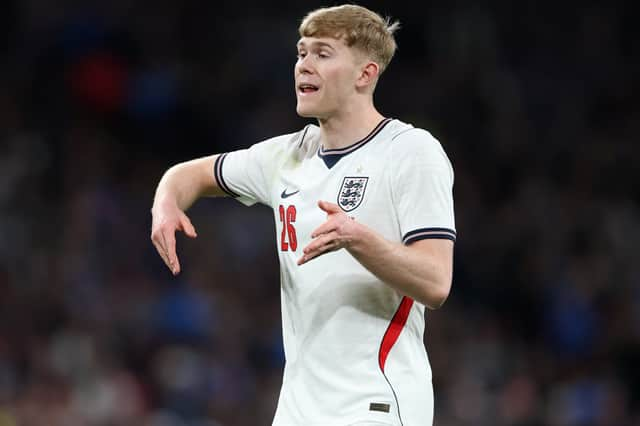
If England do want to be faster, more aggressive, and more chaotic, then playing with two attacking wing-backs and more freedom down the left seems to make sense. Lewis Hall, who was ruled out for the game against Spain, is a fine proponent of that style of play and would offer the width and attacking instincts that have been lacking. There would be a logic to playing him and giving him a longer leash than O’Reilly – who will miss Tuesday’s match against Czechia through injury – was permitted against Spain and over the summer.
Perhaps trying out Trent Alexander-Arnold out on the right instead of Quansah would provide some useful data, too. Quansah had the right ideas against Spain but isn’t one of nature’s attacking wing-backs. Alexander-Arnold may only have been selected because of injuries, but at least he’d show Tuchel what he’d have if he truly embraced a more gung-ho approach.
Tuchel is making the right noises about taking England in the direction that seems to suit his side best, but is still sticking to some of his more rigidly-structured, possession-based principles. He’s still trying to build an England side that’s just a tiny bit Spanish. It would be interesting to see how they fare with the training wheels taken off.