
Why Sunderland have serious reasons to worry as they battle second season syndrome

Will Sunderland continue to upset the odds, or are they in danger of enduring a difficult season? There are worrying signs as the new season unfolds.
It’s been more than 50 years since Sunderland last played in Europe, and 25 since they were last a consistent force in the top half of the Premier League table. These are heady times on Wearside – but as the new season gets underway, there are reasons to be worried as well as excited.


A year ago, they invested heavily in their squad and built a side which exceeded every possible expectation. This summer, however, it’s all been a little bit quieter at the Stadium of Light, and an avoidable defeat on the opening weekend has lent credence to the idea that Sunderland might struggle to avoid coming down with an unwelcome bout of second season syndrome.
Can last year’s feats really be repeated, or should the Black Cats be looking over their collective shoulder? And is there really any reason to worry about what might be coming down the road over the course of the new campaign?
The bookmakers think Sunderland are in trouble - will they be proven wrong once again?
If you believe the bookmakers, then Sunderland have a tough season ahead of them. Only the three newly-promoted sides are getting shorter odds on relegation.
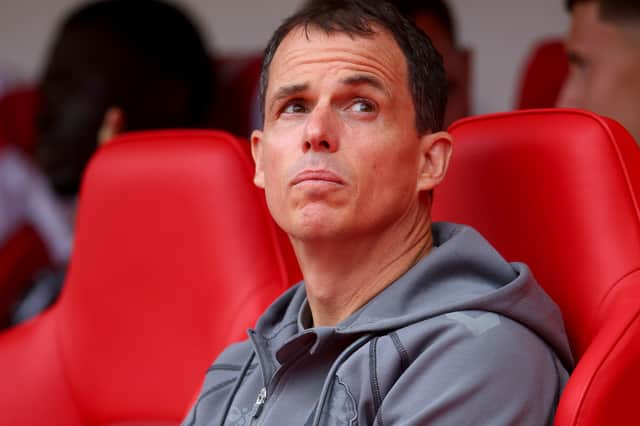
“If we follow the pundits and the odds, it’s hard to be positive,” Le Bris told the assembled media ahead of Sunderland’s opening game against Ipswich Town. “It's about being Sunderland, not the odds. We will stay true to ourselves."
Sunderland, however, lost at Portman Road, passing up a chance to re-establish the overwhelming sense of positivity which surrounded the club at the end of last season, while simultaneously reaffirming concerns that they hadn’t done enough in the transfer market to maintain momentum.
Generally speaking, teams who qualify for Europe don’t need to demonstrate substantive improvement over the following summer in order for people to assume that they’ll continue to play good football. But Sunderland’s story was atypical in many ways.
In catapulting themselves towards continental competition just a year after scraping through the Championship play-offs with a string of last-gasp victories, they have completely rewritten the rulebook on what’s possible for newly-promoted teams. Their immediate success was unprecedented, and that has led more cynical observers to wonder whether it’s sustainable.
Not that the doubt is fuelled solely by a sense of narrative – there are some rather damning statistics which suggest that Sunderland might regress, too. Sunderland may have finished seventh in actuality, but the expected goals model suggests that they should have finished in the relegation zone. Sunderland either brute forced their way past mathematical probability through pure force of will, or they got lucky.
In particular, their attacking struggles should have been more problematic than they were. Their total of 42 goals was the fourth lowest total in the division, their 38.9xG the third worst. Even supporters who tend towards a deep suspicion of stats and xG would have to acknowledged that some fresh blood is required up front.
They seemed to overcome the numbers last season by dint of sheer bloody-mindedness. They invariably found a goal when it mattered – as Le Bris suggested, simply ‘being Sunderland’ mattered more than the data did. Which is perhaps why the defeat away to Ipswich felt rather worrying.
The Sunderland of last season found ways to win matches they had no business winning. This time around, they lost a game they had every right to take three points from. Instead of scoring a late winner, they conceded one. Make a habit of that, and the stats might start to matter a little bit more.
Sunderland’s slow summer has failed to offer answers

The summer has not been a disaster despite a lack of spending. Crucially, they have kept the core of last season’s team intact. Granit Xhaka is still in the squad despite the attentions of Chelsea, Robin Roefs has signed a new contract, and Noah Sadiki is staying despite speculation to the contrary. Where other ‘overachievers’ like Aston Villa were picked clean, Sunderland seem likely to emerge unscathed.
That suggests that the impressive defence - middle of the pack, according to the data, but far better in reality – should still continue to do its job, and an iron-willed midfield will continue to provide the back line with doughty protection. But the lack of creativity further forward is a very valid concern.
Brian Brobbey has proved to be an effective battering ram up front and Enzo Le Fée has the class and vision to provide chances, but there is a lack of quality elsewhere, especially on the wings. Sunderland have been trying their damnedest to make some new signings in order to rectify that, but their efforts have proved fruitless thus far.
The Black Cats are trying to sign Jack Grealish, but he appears to prefer a move to either Everton or Aston Villa, two former sides who appear to be in the bidding. They have worked hard to land Sporting’s Geny Catamo but recent reports seem to suggest that the winger will stay put in Portugal.
Marseille’s Igor Paixão is another target, a seemingly obtainable one who could provide some directness and goal threat up front based on his considerable success in the Netherlands and his admittedly more modest achievements in the south of France. But it’s an optimistic Sunderland fan who expects Paixão to be enough on his own.
There are still a couple of days left in which to do business. It may be that, by the time the transfer deadline has passed, Sunderland will have done enough to add the firepower they often lacked last season. Maybe they will end up signing Catamo and Grealish, or some other worthy wingers. Maybe they will continue to eke out results even if they don’t. Maybe everything will be just fine.
Sunderland’s supporters, as a whole, seemingly remain upbeat. So they should – their team has exceeded all rational expectations over the past year, and they have a European adventure to look forward to. There will be Mackems in Milan soon. Even if they were to get dragged into a relegation battle, there would be an argument that they were still ahead of the anticipated curve. They have every right to enjoy the ride.
But they might also be right to worry, just a little bit. Whether they owe last season’s league placing to luck or not, their club have built an enviable platform for future successes. A bit of late business in the transfer window might determine whether or not they take advantage of that – or whether results turn for the worse, and they begin to prove the bookmakers right.
Beat Fulham on Sunday, as they probably would have done last season, and it will go a long way towards settling any jitters at the Stadium of Light. Lose again, and fail to strengthen through the final days of the summer, and ‘being Sunderland’ might start to feel insufficient.