
A 64-team World Cup isn’t the craziest idea – but it sets up a battle with elite players

The World Cup could be expanding to 64 teams in 2030 - but why, and will elite players accept it?
Here we go again. With elite football’s calendar already groaning under the sheer weight of games that need to be played, FIFA are set to consider expanding the World Cup to double its previous size. A proposal at a FIFA council meeting last week would expand football’s biggest tournament all the way up 64 teams for the 2030 edition – and the burden on players may go up one more.

The 2026 World Cup, hosted in Canada, the United States and Mexico, will already be inflated, with 48 teams set to take part in a tournament that will include an extra 40 matches compared to every edition since 1998. An additional expansion for the centenary event in 2030 isn’t nailed on, by any means, but it’s now a real possibility. But is this just yet another move inspired by FIFA’s greed for more revenue? And what would the impact of such a change be?
Why the World Cup could expand to 64 teams
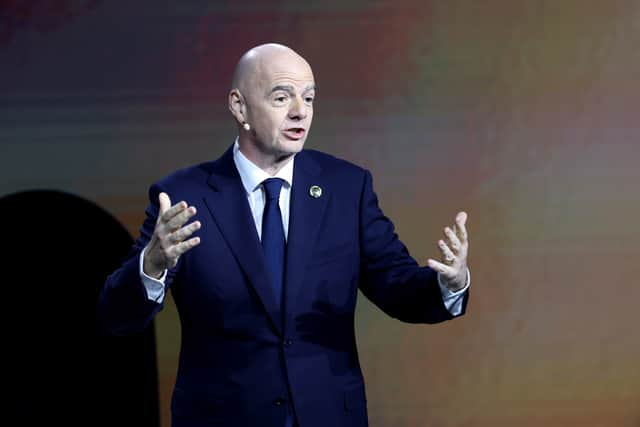
For once, this may not be unlovable FIFA president Gianni Infantino’s idea. Perhaps he knew that Ignacio Alonso, the president of the Uruguayan FA, would propose it at the end of last Wednesday’s FIFA council meeting, and perhaps he didn’t – but a spokesperson told The Guardian that the concept was “spontaneously raised” and that it would be given appropriate consideration.
In short, it’s possible that Infantino’s fingerprints aren’t on this one. He was one of the key driving forces behind both the expansion to 48 teams and the reformatted Club World Cup, both of which will put further pressure on the footballing calendar, and his apparent lust for expanding opportunities for advertising and ticketing revenue may encourage him to support the idea, but it’s too early to say whether it will garner widespread support within FIFA.
The proposal was to expand the tournament for just one edition, the ‘Centenario’ tournament which be hosted in 2030, one hundred years after the very first edition took place in Uruguay. The tournament will already be hosted in six countries across three continents, with Spain, Portugal and Morocco the primary hosts while Uruguay, Argentina and Paraguay are set to host one match each at the very start of the tournament.
Those three games in South America are supposedly in place to reflect the competition’s historic roots, but it didn’t escape notice that in ensuring that four continents were already hosts in the two tournaments in 2026 and 2030, it paved the way for Saudi Arabia’s deeply controversial hosting in 2034 to pass through unopposed.
It always felt a little odd that South American FAs would be so content with an apparent sop offering of just three matches, a move which would block them from further hosting opportunities for eight years afterwards under FIFA rules – and that may perhaps explain Alonso’s proposal.
While the format for a 64-team World Cup was not discussed as part of the initial proposal, it would inevitably mean even more matches need to be played. That could mean more games hosted in South America to accommodate the expansion, offering a larger role to the three countries involved and potentially bringing further economic benefits.
In other words, this may not be entirely about the FIFA leadership’s greed, just for once, but that could factor in to a final decision – as could the benefits to a number of less storied footballing nations who would stand a better chance of making the tournament, many of whom form a significant part of Infantino’s political support base within FIFA. African FAs, in particular, have been crucial to voting Infantino into power and keeping him there.
A number of nations who are occasional participants in World Cups or who would relish an easier shot at qualification are likely to support the proposal, and given that it could provide another excuse to increase the size of advertising and broadcast contracts, it’s unlikely that it will be dismissed by the more financially-conscious elements of FIFA’s leadership.
Smaller footballing nations would be the winners – but can Europe take the strain?
The benefits to ‘smaller’ footballing countries are not to be sneezed at. World Cups don’t just bring prestige to the countries that participate but also a chance to make money that is much needed by some of the less wealthy FAs, and an opportunity for their players and clubs to profit if their stars shine and earn moves to richer leagues.
Even if there weren’t tangible financial incentives, it’s hardly fair to dismiss the desire of countries that only rarely get the chance to play in football’s greatest showpiece to be involved more often – or even just once, if the proposed change really did stick for just one tournament.
An argument often cited against their involvement is that the presence of weaker sides would water down the competition and render the earliest rounds less exciting. There may be some truth to that, but the gulf between, say, the 32nd best team in the world and the 64th isn’t always that substantial.
In FIFA’s current world rankings (for whatever they may be worth) teams which aren’t in the Top 32 but are in the Top 64 include Nigeria, Chile, Norway, the Republic of Ireland and South Africa, all of which have plenty of history in the game and in some cases some very fine players. Would they really provide much less competition than teams like Canada, Ecuador or Hungary, who are in the Top 32? You have to go a fairly long way down the rankings before you hit teams who couldn’t give the biggest teams at least a half-decent game.
There’s a certain sense of elitism in that way of thinking which doesn’t necessarily tally with the reality of the talent pools available to some of those teams – but that doesn’t mean that there aren’t arguments against bringing more teams into the fold.
The expansion to 48 teams will already add an extra match into the equation for every team and bring the total number of games played up to 104. Expanding it further would, depending on the format, increase at least one of those numbers even further, and the strain on players is starting to become unbearable.
This year, players on top European teams potentially had to play an extra four Champions League matches and in some cases will also have to play as many as seven more matches through the summer in the expanded new Club World Cup. A player at an English club involved in both competitions could conceivably play 84 matches in a single season. The calendar is growing and growing, and the physical demands being placed on players is becoming untenable.
The possibility of a strike has already been openly discussed, most notably by Manchester City’s Rodri, and that isn’t just bluster. FIFPRO, the umbrella organisation for global players’ unions, and several European league bodies have already launched an action against FIFA’s unilateral expansion of the schedule through the European Commission, and a recent PFA survey suggested that 60% of players believe that the current schedule is contributing to an increase in injuries and fatigue.
In other words, filling out the schedule even further pits the understandable interested of those ‘lesser’ (or at least less wealthy) footballing nations against the interests of the players, clubs and leagues and the very highest levels of the game – and the backlash FIFA is already facing may give them some pause for thought before green-lighting an expansion to 64 teams.
The burden on players is reaching the point of obscenity, and an even larger World Cup will only increase that, both in terms of games played and the number of time that they’d be away from home and with their national team. The amount of time available for elite players to rest is becoming minimal, not helped by their teams insisting on money-spinning pre-season (and sometimes even post-season) tours. Something has to give, sooner or later.
Whether FIFA care about that is another matter. Their actions over the course of many years have demonstrated that their interests are primarily financial and largely do not align with the needs of the players. It would, perhaps, be more surprising if they refused to further expand the World Cup than if they went ahead with Alonso’s suggestion.
Do the need for elite players in Europe to get appropriate rest and recovery time outweigh the needs of players who may get an otherwise unobtainable chance to showcase their skills on the biggest stage of them all? Perhaps not. But don’t expect any further expansions to football’s calendar to take place without a fight.