
Gianni Infantino's plan to sell the World Cup could be destructive - unless The FA can stop it

Gianni Infantino is planning to sell a stake in the World Cup to private equity - and football needs its biggest nations to oppose it.
It’s been ten days since the 2026 World Cup finished. It may now be less than eight weeks until the World Cup as we know it is finished altogether.
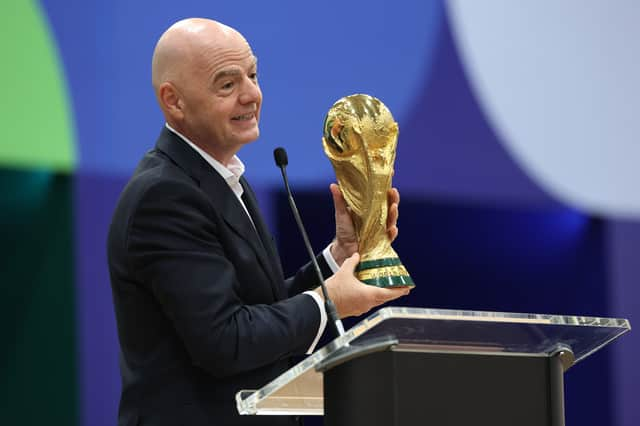

On Tuesday, reporting by The Times and The Financial Times revealed that FIFA president Gianni Infantino had hatched a plan to sell a stake in the commercial arms of the global game’s governing body to private investors, threatening to put football’s most important tournament into the hands of people who were motivated solely by profits rather than the competitive integrity of the sport.
It’s a move which has come as a complete surprise to most of football’s stakeholders and one which has created uproar. It’s a plan which will enrich FIFA and Infantino personally, at the risk of impoverishing football as a whole. It’s also possible that only Europe’s most powerful governing bodies, including The FA, have any chance to stop it.
What Gianni Infantino’s plan to sell a stake in the World Cup means for football
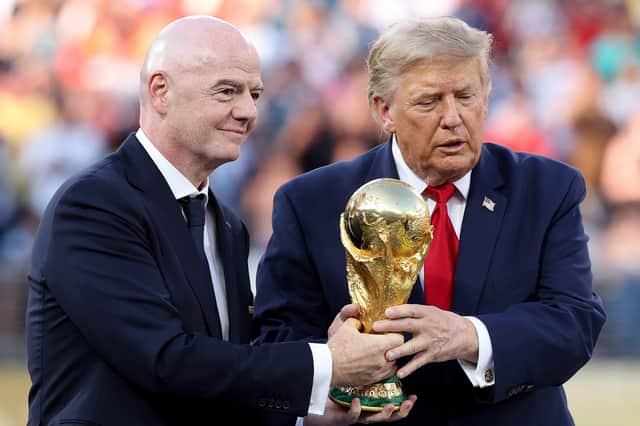
Infantino’s proposal would see a new company, dubbed FIFA Forward Enterprise (FFE), formed to take control of the commercial rights for both the men’s and women’s World Cup and the recently-expanded Club World Cup – with FFE then selling a minority stake to private investment companies.
The search for investment would be led by Thrive Capital, a company founded by Joshua Kushner, the brother of Donald Trump’s son-in-law Jared. It’s a move which could bring football further into the political orbit of the American far-right, and there is an astonishing lack of transparency in terms of how the process of identifying and selecting investors would play out.
Infantino insists that FIFA would maintain the controlling stake in FFE, meaning that any private equity companies who invest would theoretically not take charge of decision-making – but in practice, it would offer a seat at the table to companies who have financial interests at their heart and not the integrity of the sport or of the World Cup.
Private equity would, for the first time, have the opportunity to apply pressure to FIFA’s decision-making process, including the choice of host nations, who broadcast and advertising rights were sold to and how they were packaged, and how the World Cup was structured and managed. The implications are far-reaching and the notion that FIFA would act solely for the good of the game when billion-dollar investors were in the room with them seems like wishful thinking at best.
The benefits, as FIFA sees it, would be a rapid injection of cash in the form of an estimated £7.5bn raised from the sale of shares in FFE. Member nations who vote in favour of the proposal would receive $40m (£30m) as an ‘incentive’ – according to Sky Sports News.
That sounds an awful lot like an attempt to bully nations into getting in line ahead of a vote on the proposal which will take place on 19 September, less than eight weeks away. It may well work.
Infantino needs a simple majority of FIFA’s 211 member nations to vote in favour of the plan for it to proceed, and for a great many of those FAs the sum on offer is colossal. Infantino’s presidency has been propped up by support from a large number of smaller footballing nations, especially in Africa, who have benefitted from the increased funding which has been funnelled towards them during his tenure.
This is an extension of the ideology which earned him his power in the first place, and there is every reason to believe that a great many countries will go along with it. At the time of writing, CAF, CONMEBOL and the OFC had yet to make their positions plain, but many of their member nations will be tempted by a sudden influx of cash.
Of course, Infantino stands to gain personally too. The Times reports that he plans to act as commissioner of FFE once his final term as FIFA president, which is expected to run until 2031 assuming he wins an upcoming election in which he is likely to stand unopposed, comes to an end. That post would apparently earn him a salary of upwards of $60m (£45m) per year.
If this measure passes, then the men’s and women’s World Cup will be up for sale. The competition’s future will most likely be determined not by people who want to improve football but who want to make as much money from it as quickly as possible. It’s a desolate proposition in an era in which private equity has caused immense damage to many sports and other public services which needed a quick buck.
Will European nations be able to stand in Infantino’s way?
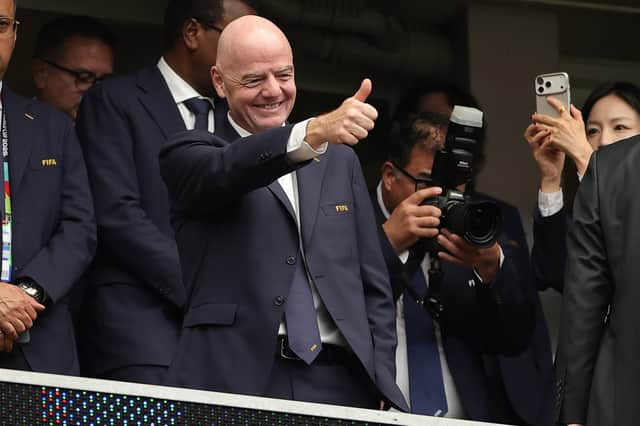
Infantino’s grim proposal now sets the stage for a battle between UEFA’s powerhouse member associations and FIFA, with the outcome distinctly uncertain. Associations who prefer to remain aloof from political conflicts within the game will have to choose a side. The result could be a schism which redefines how football is governed for generations to come.
This isn’t the first time that Infantino has tried to bring private equity into the fold. In 2018, he backed down from a $25bn deal with Japanese bank SoftBank which would have financed the expanded Club World Cup and a proposed global version of the Nations League after he failed to get the support required – with European nations leading the opposition.
This time, Infantino has changed tactics. Not only has he offered money up front to member countries, but he has completely bypassed the FIFA council, made up of representatives from every nation who are meant to provide oversight. They were collectively blindsided by the plan, which has caused considerable rancour. The result is a more strongarm approach to acquiring the necessary votes, and less time for potential opponents to pull their arguments together.
UEFA has already condemned the proposal in strong terms, stating that Infantino’s plan “crosses a line that football’s governing institutions should never cross.”
“The soul and governance of football are not assets to trade,” the UEFA statement said. “Especially with zero transparency as to who gains financially. None of us are the owners of football. It is not FIFA’s to sell.”
UEFA’s opposition is expected, given that its president Aleksander Čeferin has often found himself on the opposite side of Infantino in debates – but other federations have been less outspoken, with CONCACAF and the AFC’s statements focussing on concerns over the lack of transparency and due process involved in the decision-making process without openly opposing the foundation of FFE or the sale of stakes to private equity.
UEFA’s opposition is significant but may not be decisive. Many of its member nations, particularly those less well off, have been long-standing supporters of Infantino - the president of the Czech FA, David Trunda, has already voiced support for the proposal. Only a handful – most notably Germany, Spain and Norway – have been open with their frustrations about the current presidency.
The FA, a body whose support for Infantino is tepid at best but who prefer to remain apolitical whenever possible, has followed CONCACAF and the AFC in releasing a statement which says that it is “deeply concerned about the lack of process and governance” but which stops short of threatening to take measures to prevent it from being implemented.
It’s a tepid initial response to a proposal which has horrified many football supporters. A plausible defence for The FA might be that the lack of detail and transparency available at present makes criticism of specific issues with the proposal challenging, but there is a worrying absence of uproar at the very principle of selling football’s grandest tournament to private investors.
The FA and its counterparts must find their spine – or the damage could be severe
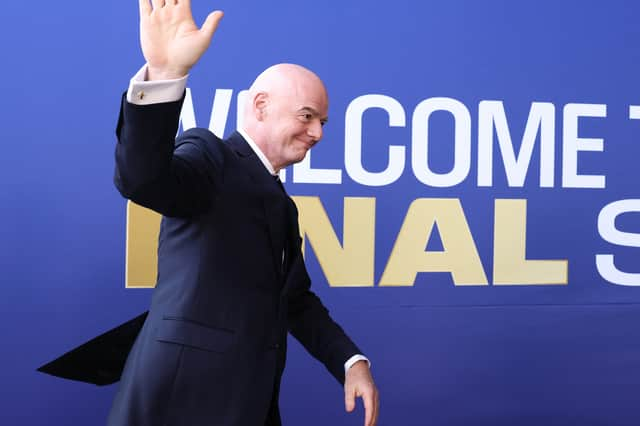
Some of that hesitancy may be due to the fact that the only way that there are only two ways for European countries to defeat the proposal – firstly, to convince other nations to vote it down in September, and secondly to break away from FIFA entirely. Given that the financial incentives being offered by Infantino could make the first path difficult, the second path is something that has to be seriously considered. The ramifications would be immense.
Ultimately FIFA only run the global game by the grace of its member nations, and the biggest European countries theoretically have immense sway thanks to the fact that their presence at competitions like the World Cup creates a huge percentage of their financial value.
A World Cup without England, Germany, Spain and other giants of the game would not only lose prestige but also a significant proportion of its potential to generate commercial revenue. It’s a power that those countries have rarely demonstrated any desire to wield. They may now face a choice between using it and allowing the game’s integrity to be auctioned off to the highest bidder.
Would a handful of the biggest countries really be willing to withdraw from FIFA and the World Cup, throwing the entire future of international football into chaos? Are they prepared to go against the wishes of dozens of less wealthy nations, who would see them as standing in the way of their enrichment? Do they have the stomach to fight the inevitable legal battles that would ensue? Will they get any support from federations like CONCACAF and the AFC, or do their concerns not reflect the stance of their members?
For the sake of the game, it will probably be for the best if they gird their loins and prepare to throw their considerable weight around. If Europe’s biggest FAs fail to stand united against Infantino’s attempt to divide the governance of the sport between himself and private investors picked out by allies of a far-right government, the consequences could be dire and the game damaged in ways that are only partially foreseeable.
There will be opposition to Infantino’s plan. It may be enough to shut it down from the start. If it isn’t, however, then organisations like The FA face a stark choice – to stand up for the fundamental integrity of football, or to roll over and follow the money down whichever grotty, greedy road it leads. Once the World Cup has been sold to private equity, it can’t be unsold.
The FA and their allies in Europe must be prepared to leave FIFA. If they aren’t willing to take that step when the moment comes, then a sport which means an immense amount to millions of fans will be reduced to a cash cow for a handful of ultra-rich investors and for Infantino, a man whose moral compass always points towards the money and who shows few signs of genuinely caring about the sport he has been appointed as steward of.
Heaven knows how much harm would be done if that happens – and if a schism is the only way for England and other countries to opt out, how much harm might be done simply because Infantino put the sordid idea on the table in the first place.